30 July 2008

Conversations ii


My friend is visiting. We have endless conversations, many of which would be of great feminist/psychoanalytic/marxist interest. The exchanges between us could be excerpts from Nathalie Sarraute's The Planetarium:
- Have you not considered buying a new table for your TV? [energetic, conversational tone]
- Why? [imitating real exasperation]
- But you made it at school! It's old.
- I did. It was nice. Anders helped me. It is a nice table. Solid.
- That color...
- It's retro.... I like mustard yellow.
- No, your apartment looks like a child's room.
- I don't care. I'm a hippie.
- No you're not. But you could get a new table. From IKEA. To make your apartment look more grown-up.
- I don't fancy the grown-up look.
- I know. Your such a lad.
- Uh...
- Let's go to IKEA. You'll find something. New furniture. New stuff. For your apartment. It will look nicer.
- I don't like IKEA.
- But it can't look like this forever, your place.
- Look, I don't want any furniture. I like it the way it is.
- But more grown-up...
- I don't care a rap about that.
- you could get...
- I DON'T WANT NO FUCKING FURNITURE!!!
- ... You could buy a coctail cabinet... From IKEA.
- -------

29 July 2008

Batman

I hardly ever watch action movies. It is even less probable that I go to the movies to watch big explosions and gunpowder. My friend bribed me into watching Batman - dark knight with her. Was this a political parody? Or was it a shady tribute to shady political ideas ("this is an endless war. We won't call those who fight it heroes, but still, somebody's got to do it")?

23 July 2008

man-sized agony: on the idea of "the crisis of masculinity"

Today I read it again. 'Finnish boys and young men are miserable'. Their mental health are, it is stated, worse than 'we' (?) used to think. "Grown men and knowledge about boys are needed in ordinary life, in schools and in health care. We should learn more about the needs of boys, about their development and what torments boys and in what ways they express that they don't feel good." (HBL, 22.07). This is a piece of advice from expert doctors at "Befolkningsskyddet" (at their home page translated as "Rescue services"). Provided we give this a very charitable reading, I would agree with it: the gender matrices of masculinity are fucked up and of course that is something that afflicts people, all of us, in one way or other. But I suspect that is not, at least not mainly (mabye they would talk about "destructive gender roles" or something) that they are talking about. Observation nr. one: They are talking exclusively about boys.

The doctors seem to say that boys have peculiar problems of a psychological nature of which we need to gain empirical knowledge, so that they can be dealt with. (There is another charitable reading I will say more about later: that we look away from the way masculinity is oppressive, not only to women, but also to men.) It's time to talk about things that we normally keep quit about, they most probably suggest (the insufficient, sublimating state of vittuperkelesaatana). The first part of the quoted sentence, "Grown men [....] are needed in ordinary life, schools and in healt care." Why do they put it like this? Well, it might not be too far-fetched an interpretation if we take them to say that there is something about grown men, their sex/gender that makes them more insightful with regards to the troubled minds of young males. From this can be derived a pretty essentialist idea about sex/gender, according to which these are something we, in a very simple and concrete sense, have. Thus: males have their peculiar problems, and guys are, because they are male, more well-prepared to understand the nature of these problems (and perhaps take appropriate action? - "role models").

Girls and women have, for a very long time, been the object of psychologizing and diagnoziation. One might even go as far as proposing that some ways of talking about "women" and femininity are internally related to talking about something as a psychological tic, a diagnosis or a psychological phenomenon. (Do I have to mention examples? PMS, hysteria, self-indulgence, "empathy", "tears come so easily for women....") Well, are we seeing the same development, but a male set of psychologisms? Yeah maybe. But the interesting thing, of course, is how these "psychologisms" are used. "Boys with psychological problems need understanding from other men." Well - what might be the point of saying such a thing? "Little Teddy is prone to act aggressively. His dad, who is a baseball player, will teach him a few things about turning his aggression into something creative. After all, boys will be boys." In this example, Teddy's anger, gushes of rage or what it might be, is treated as something that does not express anything about him, about his life, his relation to others. No: aggression is some sort of force that may be directed against different objects, some of which are more socially accepted than others (it's much nicer to be a baseball player than a serial killer).

The assumption here seems to be that there is a "male nature" that needs to be understood (and the next assumption is that males have a direct access to this understanding). The folks from "Befolkningsförbundet" claim that "there is a lot of pressure in growing up to be a man. You are either a winner or a loser. These models may be prohibited by means of recognitions of [boys'] need for help." Again: if we opt for a charitable reading, we may give these doctors credits for talking openly about the way people are crushed under stupid gender patterns. But there is still something in the article that makes me doubt whether they would say this. I hint a trust in "the good masculinity".

The common idea (and I don't necessarily want to ascribe this to the doctors in question), anyway, is that there is a lot of anguish because males are confused. Why? Because of the changing gender roles. It is no longer (here we go again) socially accepted for men to treat women as house slaves and sex slaves, thus, they must adapt into something else - but what? The problem is, many would say, that there is no clear model of what to be "as a man". Males are confused because there are too many masculinities. And hence the psychological crisis of young boys (but according to this argument, grown-up men would be in no better position to offer guiding to their juniors). You might ask why I am critical of this way of talking about "men in crisis". One reason (and it is a weighty one for me) is that social acceptability, combined with some hypothesis about "male nature", seem to be presupposed here. As if the main purpose in life for men - the way to harmony & happiness - is spelled a solid masculinity. Well, folks, if you ask me, that is fluff. One may be confused about what kind of person one is, about what kind of person "one should be". But I would say that a part of this confusion is that one is worrying about being "a particular kind of person". Instead of, you know, living the best one can.

At present, I am reading Paris-Dakar by Jens Liljestrand. It is a good book precisely because in it, Liljestrand questions the idea that there is a form of untainted, absolving masculinity in which troubled men takes comfort during hard times. His point seems to be that men are tormented by masculinity, that masculinity is a hang-up, a ghost, a false escape. In a next to perfect pitch, Liljestrand goes through the gendered clichés. In one of the short stories of Paris-Dakar, the author presents the respectable man who is seen as boring among his friends but who is good at organizing stuff. When he can't even hold on to that picture of himself, his entire existence is breaking down. Liljestrand's stories are packed with men who "feel miserable". But to use the psychologistic language that I referred to above would not fit the perspective he writes from. The pain he masterfully depicts is not dissolved by pointing at the dream of a solid masculinity. The problem is, I agree, Identity. But the book provides an argument against it. Every form of it. Identity is the problem (sickness unto death, if you will).

22 July 2008

Haneke: 71 Fragmente einer Chronologie des Zufalls (1994)

There is something about 71 fragments - a chronology of chance (directed by Michael Haneke) that made quite an impression on me. Like several other movies during the 90's and the 00's, Haneke explores the place of chance in human life. Like several, maybe too many?, other movies, it is the way the story is told that makes us reflect on chance, destiny and the fragility of human life. We have seen a thousand more or less contrived techniques of weaving stories together and thereby obtaining some sort of dramatic denouement. The moral intentions of these films may be praiseworthy, but this sort of artistic device has almost become a one-trick pony by now. (Well, I'm having Babel, Crash and a few others in mind) Superficially, 71 fragments is not that different. Separate stories are told, and towards the end of the film the threads are tied together. But let's get into the details. Haneke works with (mostly) short, intense scenes which are often, as it were, cut off in the middle of the action, even in the middle of a sentence. There is a pause between every scene. A few seconds of black screen. No music, no nothing. All scenes are bristling with tension. The characters are portrayed in what they do and what they say, they are revealed in small, ordinary things. But, remarkably, we are acquainted with them immediately. In the span of a few minutes, I feel terribly close to them. (I don't feel that way very often when watching movies, but I came to think of Elephant by Gus van Sant here, for several, some of them obvious, reasons) That doesn't mean we know a lot about them. We know next to nothing about the characters, many times not even their names, but that don't make them any less real. I hesitate to point it out, but a character may be experienced as believable, as "real", without this having anything to do with identification. Sure, there is some sort of "detachment" at play here (see here) but 'detachment' here simply means that we are given the space to look for ourselves. The emotions we may feel are not forced upon us (by means of manipulation, sugary descriptions, etc.).

Sometimes just a scene depicting a guy playing ping-pong by himself is loaded with the force to express so much. The explosive, mesmerizing, character of the pictures is difficult to put into words. In one scene, a middle-aged couple are having dinner. In that small scene, we watch the facade drop while their lives fall apart. But even though there is an "explosion" here, it is treated carefully. The aftermath, the stretched-out picture of two agonized faces. Two pair of hands holding on to a fork and a knife for dear life.

Sequences from the news are shown repeatedly. We watch the same sequences - about the war in the former Yogoslavia, and the Michael Jackson child molesting scandal. Jackson & genocide. In the setting of the evening news, they are presented as being of equal interest, as "information". "This happened today". (This particular aspect of the movie could easily have become extremely tasteless and - you know - cheap, but I think there are some redeeming traits of his "media criticism") I suppose one thing I came to think of while watching 71 fragments is how pictures do move us, shake us, but that there is no given form of how to give an honest account of something that is evil or corrupt. The violence that is included in Haneke's film is not graphical. It is only hinted at, or it takes other than physical forms. I find this film being a slightly more rewarding, much deeper, account of violence and cruelty than, for example, Funny games (1997) even though they might share some themes in common (a discussion about how to portray violence without it becoming exploitation or entertainment).

"Haneke is a purveyor of contemporary alienation". That expression is off-putting. But maybe there's a hint of truth in it nonetheless.

21 July 2008

Genesis Breyer P-orridge

You might be familiar with Throbbing Gristle and Psychic TV. Here's a link to an interesting interview with Genesis Meyer P-orridge. A lot of the things he says, his persona, are very sympathetic. Some of the stuff he talks about are a bit strange. At least he seems to have an interesting comprehension of gender. Go have a look:

http://blogs.guitarworld.com/metalkult/videos/genesis/

20 July 2008

Jafar Panahi

I don't want to contribute to stupid stereotypes, but there are some things about the Iranian movies I've seen (many of them banned in Iran) that set them apart. The natural feel of the dialogue, intriguing depictions of urban Teheran - not to mention the gentle, subtle sense of humour that is present in many of these, often bleak and politically critical, contemporary Iranian films. During the last few weeks, I've watched some films by Jafar Panahi. On this blog, I've talked about one of his films, Offside, before. The film, which depict the eager attempts of female football fans to sneak into an important soccer game unnoticed, is still one of my favorite Panahi film. Oppression of women, its day-to-day expression, is also what is the central theme of The Circle (2000). I liked the principle of storytelling in that film, how the camera follows the story of one or several women, only to switch its attention to others. the women characters were quite mysterious, and many of the circumstances of their lives were left untold (we learned that several of the characters were on a temporary leave from prison, but their crimes were not revealed). But I had some doubts about the first part of the film. I was simply never really absorbed in the story. But that said, the film is well worth watching. Offside felt like a much more forceful statement (even though not in a traditional sense as "serious" as the other), while I, at times, felt that The Cirle lost something of its importance/immediacy by lumping women's life together, so that they, to some extent, were portrayed exclusively as victims of oppression and not as individuals fighting their ways through life. As much as I am a bit critical, I also understand that one of the cruelties Panahi wanted to comment on is the way women's lives are weaved together in a common fear of the police, and other things. It is a mark of oppression that it makes people into a gray mass, that people are made to believe that's what they (and others) are. Perhaps I had better say that the lumping together, the, if I may say so, anonymity of the stories, were not the problem, but the artistic realization was not completely satisfactory.

I was much impressed by two films by Panahi in which the protagonists were (female) children. The best of these two, The White balloon (1995), revolves around a girl's desire to purchase a fish for the new year's eve celebration. A fair comparison may be made to The Apple by Samira Makhmalbaf, an equally simple and forceful story about children in Teheran, but it is worth pointing out that Makmalbaf's film is much more political. The story of The white balloon takes place "in real time". The temporal range of the story equals that of the film, the result being energetic; a steamy portrayal of new year's eve in Teheran. The gist of the story? Razieh asks her parents for money to buy a goldfish. She insists that the fish should be a fat one. On her way to the fish monger's, she looses her money a few times, but regains it. But then there is the accident of the money falling down on the street, into the store owner's cellar. The kid's wanderings in Teheran contain many interesting encounters, great location, and dialogue filled to the brim with life. This could just as well be a film for kids, not only about them.

The temporal principle of The Mirror (1997) is the same as in The White balloon. Here, we see a little girl waiting for her mother outside the school building. She has enough of waiting, and tries to make her way home all alone. Somewhere in the middle of the film, the "actor" playing the kid getting lost on her way home says she is tired of acting. After that the crew follows the "real" odyssey of making one's way home as a (female) kid in Teheran. Of course, Panahi plays with quite a few film conventions ("what is real", pictures as representations, "mirrors", "plot" etc) but I simply enjoyed watching it, and put most of the theoretical questions aside (for better or for worse, I don't know).

17 July 2008

Gösta & business

Gösta's hand trembles. This was the door, this was the house. Once, it was his life. Now, the tools. Fine. Let's go inside. Let's have a look. Gösta's chair, Gösta's desk. Gösta rummages through the documents. Gösta finds what he is looking for. The figures, the names, the locations. There will be no complications. They trust Gösta. They are expecting him at noon. He knows where to go. He knows the face he should look for. Everything is settled.


Once, it was his life. Gösta had contacts. Gösta knew things. He was around. He recalls the lunch breaks; kauppalehti and the curvy worries of the stock market. Bad Chinese food. CEO:s and delicious coffee. Coffee stomachs rumbled and the clock was ticking. Like a bad sign: time is money. You are but the embodiment of it. Deal with it, kid. They told him stories about India, the outbacks of the jungle, the endless seas. The arctic steppe. The heat of the southern sun. These stories were jokes, edification, moral guiding, professional advice - spiritual numbing. A disclosure of realism. He was driven towards it. It felt good. He surfed the wave. "If you intend to work here, you must not grow soft-feeted." said Boss, eyes of blue steel. "Don't take it personally." "This is the way it works." Boss wants them to believe they will change everything. There's endless possibilities, endless challenges. His voice is infectiously sweet, alluring, seductive. You have to leave everything behind, Gösta. Forget everything you learned. Forget everything. Step into the room and look into the light. Look into my eyes and try to look like you believe it. You want to. I know it. You do.

Gösta listens to the hum of the document destroyer. Serious business, it is. Gösta learns a word: clandestine. Gösta learns the rules: this is important shit, one step in the wrong direction, and you've destroyed everything. Everything. It will destroy you, too. This is not for the eyes of the world to see. If you're involved in serious business, you can't run around telling everybody about it. You understand. The professional knows when to keep quiet. The professional never forgets who he represents. He keeps an eye open. Keep an eye on the next guy. Close the door, will ya. Let's talk. We're in for something BIG. The whole place is in a frenzy. Nobody eats, nobody sleeps. Nobody counts the hours. It's happening.


The distinction between soft values and hard values is glued into Gösta's mind. Hard values are hard facts. Tangible, real, concrete. But we are only humans. Humans are tricky. Humans get in the way of stuff. Machines, projects, plans. Humans are silly. But they can be managed and management takes on different forms. Business is a whole, consisting of many parts. Gösta reads books about human resources. Gösta writes masterpiece reports. Team building, Capacities, integration, core values, value creation. Gösta grows deeper into nu-speak, biz-speak, no-speak. Gösta's mind is a blank. Gösta is afraid of himself and what he has become.

Gösta jots down figures. Gösta sweats and makes things up. Gösta falls asleep on his desk. A nap. Nobody will notice, too busy. Gösta drinks 8 cups of coffee. In the afternoon, he sneaks out of the office. "An errand". Gösta and Gösta's mate hole up in a cafe nearby. One of them is smoking. One of them is complaining. Gösta eats a donut. It's another quarter, Gösta. It's another round. The leaves are changing color, and Gösta realizes something. He packs the bag with the computer, the documents and his coffee mug. His Powerpoint conclusions (five points about morality & management). It's a cloudy day. There's no wind. He throws all this shit into the river. Gösta's history rests in the company of rusty bikes and rubble. Gösta walks down the street.

15 July 2008

Notes from an island

It's a shame that Tove Jansson is mostly associated with the Moomin characters she created. Not to say that these books and cartoons weren't great - they are. It's just that her other books, and her art, have remained quite off the radar. My sister used to talk a lot about her and Tuulikki Pietilä's book "Anteckningar från en ö", published in 1996. I read the book, and was moved by it. In "Haru, yksinäisten saari" ("Haru - ensamhetens ö"), video clips filmed by Jansson & Pietilä are accompanied by Birgitta Ulfsson's reading of some of the texts (in Finnish for some reason, maybe there are two copies of the film?). Ulfsson's humorous delivery fits the material since it brings out its warmth, a no-nonsense perception of life in the archipelago.

Jansson & Pietilä spent many summers in the Pellinge archipelago, on an island inhabited by nobody else - Klovharun. Jansson writes about their day-to-day life on the secluded island. She talks about the surroundings, but there's no hints of pastoral sentimentalism. Her observations are dry, and very evocative. There's joy, melancholy and grief. Ordinary things: how they grow more quiet, as there is so little to talk about, how they talk about the weather, how every small change of weather becomes interesting. Having grown up in the archipelago, I am familiar with this enormous fascination with weather. That it can mean different things. That you can say: "there's northerly wind" in a thousand ways, all of them expressing different things, depending on the context.

But it is the pictures, the clips, that truly make the text come alive. The transformations of nature; wind, sunshine, rain, but also the daily activities of fishing, resting, boat trips - dancing.

When I read the book, my immediate reaction was that this is one of the most moving accounts of love I've ever come across in my life. That impression stuck with me as I was watching the film. There's the way one of the women films the other, gently. Watching their faces, usually smiling, cracking up into a hearty, beaming smile. It is very beautiful. They are very beautiful. Just watching the pictures and listening to Jansson's matter of fact tales of Pietilä's skillfullness with regards to machines, their inventions, their boredom - convey so much.

RinneRadio, an excellent Finnish jazz/electronica band, performs most of the music of the film. A tasteful choice of music, if you ask me. The only thing that puzzled me - amused me! - was the use of Scott McKenzie's "If your going to San Franscisco (wear flowers in your hair)" in combination with pictures of one of the women's joyous dancing movements. It's a long way from Frisco to Pellinge. But maybe that's the point.

I also want to recommend the documentary about Pietilä's and Jansson's travels together, "Tove & Tooti i Europa" (2004).

12 July 2008

Religious knives: It's after dark


Religious knives - not familiar to me until recently. The group has been making music for a while and the members are, so I've heard, involved in a lot of other hip projects. All I've got is It's after dark. For the moment, I don't need anything else. This is: The Doors at their druggiest, Morrison-the-crazy-shaman / Panda bear (Young prayer) or Grizzly bear-ish otherworldliness / Suicide's Suicide / Slow, slow, slow / Droooones. Sweet drones. Turn it up, let the speakers explode!

11 July 2008

Resnais: Night and fog

In 2000, or 2001, I travelled around in eastern Europe. I spent a few days in Krakow. When I arrived, I happened to meet a young man who studied to become a priest. We wandered around town. We talked and had a coffee. He dragged me along to a castle that I cared nothing about, but I pretended I did. He was talkative, but there were some things about him that made me wonder. I confided to him my doubts about visiting Auschwitz. For some reason, he didn't really want to discuss it (and maybe I understand him). Instead, he was eager to offer me practical advice about how to get there, the bus routes, the time tables. I spent a restless night at a strange place. Eventually, I decided to go.

I found the right bus stop. It was not difficult, as there were groups of tourists waiting. A group of people were carrying McDonald's bags. On the bus, the stale smell of burgers & chips made me feel sick in my stomach. The ride took about 1 1/2 hour. The sun was shining, and I observed the small, quite neat-looking, villages that surround the concentration camp. I wandered around the area in silence, having declined the offer of an audioguide. There were enough voices in my head. Is this a museum? No, and yes. No. I looked at the mountains of glasses, hair, and kids' shoes that were on display. The barracks. At one point, I was overwhelmed by it all and my head started to spin. I sat down on a doorstep while a never-ending stream of people walked by. Some were quiet. Some were talking incessantly.

Another bus took me to Birkenau. It was a trip of about 15 minutes. On that bus, there was dead silence. Most of the tourists came in groups, but they were not so many. It was quite windy, and the sunlight had the bleakness of late afternoon. The first thing I noticed was the tower and the entrance. I walked. I walked fast. I walked through the open fields, the nakedness of the landscape forcing itself upon me, until I reached the edge of the woods. That felt like a relief, somehow. Looking out on the fields, the place felt huge, the railtracks worming their way into eternity. Most of the buildings are gone. Many were destroyed by the Germans in 1945. In the woods, there were some rusty rubble, a wooden table, a spooky glade. I felt empty inside, and turned back. An American, elderly woman passed me by. "I noticed you a while ago. You're really having a walk," she said, cheerfully, as if we were on a hike together. I nodded, and found my way to the bus stop, which was situated outside the camp, maybe 500 meters away. All the same, it was an altogether different world. I sat down on the asphalt. There were a lot of kids on the bus. They were not tourists, they were living in the area, going to town. I listened to the sound of their happy voices, and maybe I fell asleep for a while. Back in Krakow, I headed straight to my shabby lodging, and spent the night looking at the wall in front of me. It was a nunnery that accepted foreign (not religiously affiliated) tourists. At 2 am, a group of noisy Americans stumbled in. Their steps and their voices resonated in the whole building. I think I took comfort in a book, but I can't recall which one.

I just watched Night and fog by Alain Resnais.

9 July 2008

Political self-righteousness

From today's Independent:

Speaking in Hokkaido yesterday, the Prime Minister admitted that Britain was facing a "difficult economic time", but insisted that it was not a fault of his leadership. "Every country in the world is facing a difficult economic time because of what has happened in oil prices and food prices," said Mr Brown. "I think I am the right person to take people through these difficult times."

Mr Brown's "reassuring words" illuminate a thousand reasons for why I feel more and more pessimistic about politics & politicians. If the concerns of politicians are primarily directed at convincing potential voters of why they are not to blame for the present economic situation, then the future does not look good. And I strongly doubt that the economic crisis of the world is resolved by the Genius of Mr. Brown.

8 July 2008

Need more sources - Shed


I'm devouring lazy vacation days. When I get up - at some ungodly hour - I don't know how the day will be spent. Need more sources, a Brittish band affiliated with (gorgeous) The Boats, provides the perfect soundtrack for a day like this. I'm listening to Shed, released in 2007. The music of it is warm and good-natured, packed with swirling strings and sublime guitar patterns. There's repetitive piano figures. On some tracks, there's drums; on "Storm", a steadfast beat makes up the backbone of the song and on "snow" an electronic beat breaths some space into the languid pace of the song. While listening to the record, I read an article about Virginia Woolf's To the lighthouse. While reading it, my impressions of the novel, its patches of subdued force, became a part of the music. The dinner gatherings. The wordless interaction. The Isle of Skye, changes of weather. Shed has nothing of the iciness or the dramatic minimalism one can hear on many contemporary electro-accoustic releases. The moods of the songs shift, but there's a sense of glimmering happiness streaming through it all. The songs of the album bear weather-related titles, which makes perfect sense. "Spring", for example, is driven by a melody that floats around, the pace above mid-tempo, tambourines. The attention shifts from strings to drums to piano, everything being performed with warmth and ease. There's some similarities between this and "neo-classical" artists such as Goldmund, Helios and Sylvain Chauveau, (and maybe Colleen) but the full-fledged sound, and the specificity of the mood of Shed makes it unique.
Myspace.

2 July 2008

Gösta on the islands of gold and myrrh

For the Åländers, Viking Line is what Mayflower was for the oppressed English pilgrims. On the 6th of december every year, when the shops are closed and when there are visible Finnish flags, 99 % of the population on Åland flee to Stockholm. Entrepreneurship, business, trade - and some depraved ships. That's the shit here.


Shell - favourable prizes for fuel and diesel. The Åländers disagree. Gösta witnessess the traces of the true opinions of the Åland people. The Åländer's constitutional right to drive his fucking car, two blocks. Gösta watches the Åland heart burst, the Åland fist hit. The Åland spirit is set free. It's set free!

Gösta recalls the days of high school angst; Camus & The Cure & anomie in general. Gösta spent the afternoons at the blue, fluffy library, hunched up with a book. Gösta did not care much about learning, but he thought he did. There was nothing else to do. Gösta wishes he'd spent his youth on healthier things. Boozing, like the rest.
Gösta puts on his best suit, brings along his monocle and heads for the dance floor of Arkipelag, a waterhole for middle-aged Ålänaders who think they are young and Åländers who act like they are 59 even though they are 25. Gösta needs a drink. Gösta needs ten drinks. There's no drink that can adapt the mind to a place like this. But there are many ways to dull the mind, the ears and the heart. Gösta visits the night club and, listening to a cover band playing Ska vi älska, så ska vi älska till Buddy Holly, Gösta gets a small taste of what life on Guántanamo bay might be like. The difference is that Gösta, a brave anthropologist, chose to be here. Gösta wonders what Westermarck would have done. Gösta contemplates the relativity of morals. Gösta questions his own.


On the way home from Arkipelag, the streets are empty. Gösta & research assistant eat hot dogs at Rökka (the new Rökka). Gösta eats two. Gösta wonders whether life should be this way. He plays with a cat before hitting the sack. The research assistant's cat. Gösta goes to sleep and has a dream about you. You ask something about bars and Gösta bends forward close-close to whisper all he knows in your ear. In the elevator of his house, which is not really his house, Gösta howls a song by Blind Willie Johnson. "I know his blood can make me whole."


Gösta looks at the bright lights. If there's a car, there's a driver. Or a ghost. Gösta's head spins with bad dreams and Viking Line liquor. Gösta's mind is soothed by poorly written political prose about hegemony and the global power of the US.


Culture & congress house of Mariehamn. There will be doors that lead nowhere. There will be music that is stone. There will be no blood. The building will be painted pink and it will be decorated with flags.


Gösta sniggers at the crazy word "självstyrelsegården", the "parliament". That's a building that looks like it was built in DDR. Åländers nurse nationalism of a sort that is hard to pin down. It's unclear whether all the fuss is about money, or sheer, you know, need for collectivity.


Gösta packs his bag with Det Åländska folkets historia, band 1-5, and sits down in central Mariehamn to show off the depths of his knowledge and the benevolence of his attitude. Gösta weeps in front of Julius Sundblom, the liberator, the founding father of the autonomous people of Åland (which has, of course, existed as long as time itself, as the world itself). "Erected by the Åland people" ("rest av Ålands folk") is written on the plinth of the statue.

North Korea has portraits of Kim Jong il, Åland launches slogans of its own: "time is money!" The favorite expression among the Åländers is: "de lönar sig..." or "de lönar sig inga..." ("it's worthwhile") Gösta eats cake and leaves town.

27 June 2008

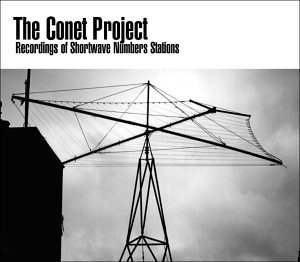
The conet project


In an earlier post, I wrote about Icebreaker (sometimes Icebreaker international) and their concept albums about NATO and free, global trade. Well, I appreciate these albums, both because of the music itself and the way the concept is transformed into music (I don't know, maybe a distinction like that is artificial).

Now, I happened to come across a review of The conet project. I downloaded it, and started listening. There's four records, and the first track begins with shortwave radio noise, an eerie music box melody, and a girl counting from 1 to 5 in German and/or Swedish. The next tracks are similar: noise, beeps, a voice counting, or calling out random words that resemble letters. And there's some music, always primitive, always very, very spooky. In a weird way, it's listenable, even, if you allow me to say so, catchy, captivating, fascinating. An example: in "New star broadcasting" (from disc 1) a melody drifts in and out of the shortwave radio noise (which is, this time, quite harsh to the ears), a voice says something, but it's difficult to make out in which language she is talking. The voices of the messages sound all-to-human and non-human (robotic) at the same time. It's not Oasis, but, then again, what is? So, what's the deal?

From the all-knowing Wikipedia:
The Conet Project: Recordings of Shortwave Numbers Stations is a four-CD set of recordings of numbers stations, mysterious shortwave radio stations of uncertain origin believed to be operated by government agencies to communicate with spies "in the field". The collection was released by England's Irdial-Discs record label in 1997, based on the work of numbers station enthusiast Akin Fernandez.

One night in 1992, one of the makers of this album tuned into some strange shortwave radio messages and that's how the idea was born (source).

And it is this story that makes the music really interesting. It is immediately situated in military - & political history. In the frenzy of the cold war. One wonders: what the hell are the spies told by means of these coded messages? To go kill somebody? What's going on with the music, why is it thrown in there in the first place? Without knowing anything about the exact messages, it's an uncanny experience to listen to it.

"with a shortwave broadcast, anybody can listen, which means that nobody knows who the message is intended for."

To my great delight, the album is available for free at the label's homepage!

26 June 2008

The village


My mother talked me into coming with her to the cemetary and, not having any other plans, I complied. For the villagers, the cemetary is a place for display of social status, for remembering those who have passed away, for mourning and reflection - but the cemetary is also a social meeting point fully comparable to the shop or the bank office. All in all, it occupies an important place in day-to-day chatter in a way that might strike the outsider as puzzling, but when once familiar with its importance, one does not think about it much (when somebody has been at some place, afterwards, she is usually inquired about the people she met there). Today we met nobody. There was a sudden gush of rain, and through the rain sunlight made the cemetary bath in an unreal dark light, the shadows rawly demarcated. While my mother attended to practical matters, I shuffled around, looking at the names of the graves, thinking about people that have been dead for many years.

When I was a kid, we had to raise money for school trips by selling lots. We were doing this at least once a year, harassing people into buying our lots. Our victims were fully aware of the very modest value of the prizes (coffee, garish towels, pens...). We were usually prowling the village for prey during day-time, when mostly elderly people were at home. I thought about that, today, when I saw the grave of "Nordens Birger" and "Nordens Ada".
Older villagers talk about their neighbors using the name of the place where the family resides, plus the forename. There was one exception, "Gösta Carlsson" was always called - "Gösta Carlsson". I wonder whether something positive was ever said about Gösta Carlsson.

When I knew them, the "Nordens" were both half-deaf, but they always treated us with candy. I remember sitting in their somehow deserted house, chewing on a mint candy, listening to the clock ticking, which was the only sound in the room. The room had the smell of old age, of the non-existence of time flowing. Ada's voice was shrill, and Birger always (or so I remember) had a curious smile on his face - as if slightly unsure of or amused by what was going on around him. I never knew whether Birger & Ada were siblings, or if they were married. That goes for some other people of the same generation. I don't know if that means anything.

Then there were scary places. Ingmar had a dog (I've forgotten the dog's name, but even the name itself conveyed danger) and as we were slowly approaching the house on a seemingly endless gravel road, we could hear the bark of the dog. Ingmar is a sturdy man, but one should not be deceived by appearances; he was kind to us kids and there are few villagers that have anything bad to say about him, which is a rare thing, indeed (my mother asked me whether I could recall his mother, but I couldn't).

Lennart was a blind man who was friends with everyone. He loved to talk. He could talk to anybody, about anything. I remember him talking about the bombing of Helsinki during the war, how everyone was leading a normal life despite the circumstances. During those years, he was a young man. He enjoyed the small adventure of riding buses without paying for the ticket. He used to have dinner at our house every week. It was obvious to everybody that he loved life. The villagers, however, are addicted to slander, so some of them considered him overly social, he "rushes on from house to house" ("springer från gård till gård"). And a few days ago, somebody said of him: "Well, you know, he was one of the N---s, for sure - he piled up a lot of junk in his house." (Some of the villagers are very skillful at turning every seemingly nice thing into a gruesome vice. The art of description.)

There are also people who lived in the village before my time that I now merely from stories and sayings. "Nu ska vi dela, sa Teddy" ("Let's divide this between us, as Teddy would say"). Teddy, and a bunch of other men, are remembered mostly for their drinking and for their witticisms. Based on pictures from the fifties and the sixties, they seem to have had a blast.

I don't know whether it is something that is characteristic of this village only, but people talk a lot about those who are no longer with us. In conversations, it is not uncommon that people recall things that happened fifty or eighty years ago. "You know these folks from X - they have always been foolhardy. You remember that time when...." "He has that from his mother, you know how she...." There's usually no conversation without an endless excursion into the annals of genealogy. Also horses, cats and dogs that lived over fifty ears ago have a vivid place in people's memories. My father sometimes talk about the cat they had when he was a young man - Pip.

24 June 2008

I'm an armchair philosopher!

Y found this fine chair in a trashbin (or something) today. So, now I've got my own comfortable chair at work in which I will perform essential tasks such as sleeping, dozing, procrastinating, drooling, sitting, resting, day-dreaming, watching paint dry, planning adventurous evenings, listening to music, gossiping, admiring my hard-working colleagues, doing nothing.

In this chair, I will set a revolution in motion.

Twin Peaks

Nothing is as addictive as Twin Peaks. I don't know how many times I've re-watched it. Many. God, I'd do anything for a donut like that right now.

23 June 2008

Bodyguard + Waiting for Godot = El Custodio


I hope you forgot the existence of that awful romantic thriller called Bodyguard. It's for sure one of the crappiest movies I've watched. The protagonist of El Custodio is a bodyguard and as I began watching it, I thought I was up for a boring political thriller. One reason for my suspicions can be derived from the bleak, grey-ish cinematography; images well fitting for German krimis situated in Bonn or Dresden. If there's something I can't digest in this world, it's German Krimis where nothing happens. Well, what can I say? Nothing much happens here, either. But to quote Simone Weil: everything good and beautiful is a mix of variation and monotony. There's a lot of the latter, because this is primarily a film about waiting. Most thrillers & crime movies include at least one scene in which two guys sit in a car waiting for something. Perhaps they are munching on donuts, who knows. In El custodio, this scene is stretched out to encompass almost the entire movie.

Rubén is a bodyguard. He works for a minister, an annoying, self-absorbed chatterbox. Rubén follows the minister wherever he goes. Most of his days are spent in drab, clinical corridors, waiting for the meetings to end, or in his car, accomapanied by a similarly stone-faced chauffeur. Rubén reminds me of Mr. Stevens in The Remains of the day, the perfect professional, for whom invisibility and discretion are virtues par excellence. It is Rubén's job to do nothing, to stay alert in case something happens (ironically, when something does happen, he is smoking a cigarette). His job is not appreciated by anybody; to many, his just ridiculous. In one scene, the minister is engrossed in an important meeting somewhere by the sea. In an adjacent room, Rubén stands quietly, staring out at the enchanting sea. He tells another man that he has never swam in the sea. Why doesn't he take the opportunity and jump in? He must wait for the minister. In another scene, Rubén waits in yet another anonymous corridor. "The minister will be occupied for a few more hours" he is told by an assistant. He sips on a mug of water from a water cistern. For a few minutes, the only thing we see is the water cistern against the background of the naked corridor. There's bubbles within the cistern, and there's a sound - burp, burp, burp. That scene is, to me, strangely Lynchian. You might remember the scene from the Twin peaks hospital in season one (after the fire at the mill)? There's a close-up of a bizarre-looking food tray, and that's it, it's just a god damn food tray and some odd-looking food, but the effect is still tremenduous.

El Custodio is a film with a grand ending, it's very cinematic, but it's great nonetheless. All in all, the film is a hard-boiled, cynical affair in a way that makes me think of Ellroy. Ellroy on tranquilizers. Ellroy with a minimalist credo. This is a good film even though it will, in several ways, test your nerves. There's no dramatic suspense - there's an awful lot of no-action, but when something suddenly happens, the result is all the more forceful.

22 June 2008

Neuroscience 2: memory, perception and antropomorphisms

Brains and memories

I'm reading a review in the New York Review of Books on two prominent neuroscientists, Jean-Pierre Changeux and Gerald M. Edelman, and I find myself quite at a loss of how to understand their ideas about "memory" in relation to the way we actually talk about memories, the roles such talk plays. Israel Rosenfield, the writer of the article, says:


In fact, "external reality" is a construction of the brain. Our senses are confronted by a chaotic, constantly changing world that has no labels, and the brain must make sense of that chaos. It is the brain's correlations of sensory information that create the knowledge we have about our surroundings, such as the sounds of words and music, the images we see in paintings and photographs, the colors we perceive: "perception is not merely a reflection of immediate input," Edelman and Tononi write, "but involves a construction or a comparison by the brain."

The main dispute between Edelman and Changeux seems to concern the issue of whether memories can be understood as neural representations. While Edelman disputes it altogether, Changeux presents a "sophisticated" functional analysis of such representations. Much of their views seem to hinge on "external reality" as a chaotic buzz that our brains, somehow, has to "take in" so that meaning can be created. Music is created out of sounds (sound waves?), and paintings are created out of - images? But, taking this view at face value, even such concepts as "images" or "colors" seems to be far too "meaning-laden" to fit into this picture of a chaotic external world. Because both "color" (as in red, blueish, pig-pink and so on) and images ("from this angle I see...") cannot be separated from meaning (or so it appears to me). If we want to hold on the the view of external reality as chaos, maybe we have better talk about this undefinable, inscrutable X that, somehow, finds its way into our brains, in which Meaning is created. Mystifying, to say the least.

Here's another formulation of the same idea, this time from an article in The New Yorker:

The mind integrates scattered, weak, rudimentary signals from a variety of sensory channels, information from past experiences, and hard-wired processes, and produces a sensory experience full of brain-provided color, sound, texture, and meaning. [...] Perception is inference.

The example focused on here is phantom limbs but also some formerly inpenetrable phenomena related to itches that may be explained by this view of the relation between perception, the brain and reality. The idea criticized here - and the criticism is justified, it seems to me - is that perception is something like a sucking in of information from the surrounding world, perception being, thus, impressions, picture-like reproductions of the world (Hume, I think, would have it that way). But now I want to ask: do the alternatives run down to these two: either we simply receive information from the outside world or our brains constantly construct meanings, sounds, colors? And what about the idea of the brain "making inferences" - can it be translated into terms that makes it less prone to have the ring of antropomorphism? (I know too little to come up with an adequate answer, but as it stands, I allow myself to be puzzled.)

Having a brain and being able to remember things are inseparable. But everything depends on what we want to say about memories. Are we talking about alzeimer? Some other neurological disease that can be shown to have an influence on some abilities? Or are we instead talking about the way we suddenly may come to think of Gunnel-my-first-teacher-at-school-whom-I-adored-so-much? Such specifications are very rarely to be found in explorations of the connections between memory and neurological functions.


For example, contrary to our visual experience, there are no colors in the world, only electromagnetic waves of many frequencies. The brain compares the amount of light reflected in the long (red), middle (green), and short (blue) wavelengths, and from these comparisons creates the colors we see.

All right, but what is meant by "the colors we see"? If this description is proposed as an explanation of the meaning color concepts have, then I think it is wrong-headed. If it is to have some other role - well, then I am a bit more at ease with it. And "there are no colors in the world" seems, at least that is how I react, to imply the question: "then, is the WORLD simply something totally independent of human consciousness, but, perhaps, something that science explores?" If so, then - well. At least some words of clarification would have been illuminating. "Do you see how green her face is? I can tell she has a terribly awful hangover." "No her face is white, not green, but I get your point." What makes you see the greenness in her face? The neural circuits in your brain?

And the idea that the brain "compares". The choice of words here is a bit misleading - if we do not buy the idea of some mix between darwinism and neuroscience, a variation of a theory launched by Changeux. (The idea that the brain strives, makes choices, compares, etc., is confused and replete with antropomorphism) But I should not say too much about Changeux - it's foolish to draw too many conclusions on the basis of a review.


Our visual worlds are stabilized because the brain, through color perception, simplifies the environment by comparing the amounts of lightness and darkness in the different frequencies from moment to moment.

"Our wisual worlds"? What does that mean? And "the brain simplifies..." is, in my opinion, just another example of the antropomorphisms I've already talked about. I get the picture of an army of industrious workers residing in my brain, who is sorting out the essential information from inessential info, so that "I" (whatever that is!) am able to take it all in. Our brains are far less considerate than what many popular ideas labelled "neuroscience" take them to be.

My brain does not see, nor does it feel. That is what I am doing, not my brain. My brain might be damaged, it may malfunction, but then let's talk about that. Rizzolatti and Corrado Sinigaglia is quoted in the articles as talking about "the acting brain is also and above all a brain that understands." and from this, a more general conclusion may be drawn:


Our abilities to understand and react to the emotions of others may depend on the brain's ability to imitate the neuronal activity of the individual being observed. When we see a friend crying, we may feel sympathy because the activity in our brain is similar to that in the brain of the person crying. We recognize disgust in another person through our own experience of the feeling of disgust and the associated neural activity.

Well, at this point I don't know what to say anymore. It's too much, it's too outlandish. No matter what can be shown to go on in the brains of human beings when X takes place, this does not mean that brain state X "lies behind" what human beings do in this situation. And I don't even want to start explaining why this picture of "understanding others' emotions" is utterly wrong-headed, boarding on the bizarre (even though this picture has got a lot of currency nowadays).

Subjective dimension of memories?

Rosenfield also mentions the "subjective character of memories":


In general, every recollection refers not only to the remembered event or person or object but to the person who is remembering. The very essence of memory is subjective, not mechanical, reproduction; and essential to that subjective psychology is that every remembered image of a person, place, idea, or object inevitably contains, whether explicitly or implicitly, a basic reference to the person who is remembering.

But I'm not so sure that "refers to" will help much. One is easily inclined to imagine that there are two things: the recollection (an image of some sort) and the person it "refers to". But when I suddenly remember your last name, or when I think about our adventures yesterday, or when I resent having got so pissed at the party - it is not some curious "references" that makes these my memories (or my thoughts). Compare: "Oh god, I don't want to think about this, I wish I was not the person who got drunk at that party." But usually these questions do not arise at all. Furthermore, it would be quite misleading to say that all memories are images. "You didn't return the books to the library, even though you promised to do it." - Where's the image in that?


But the hope lives on that science will clarify the nature of memories, even the subjective nature of memories:

And as these differing views show, while we are still far from a full understanding of the nature of memory, perception, and meaning, it is nonetheless because of the work of scientists such as Changeux, Edelman, and Rizzolatti that we have a better grasp of the complexity of subjective experiences.An unexpected scientific discovery can give us a new insight into something we thought we had always known: mirror neurons, Rizzolatti tells us, "show how strong and deeply rooted is the bond that ties us to others, or in other words, how bizarre it would be to conceive of an I without an us."

The "complexity" referred to here is, of course, of a purely scientific nature. The many aspects of memory that Proust talks about in Time regained appear mysterious to the neuroscientist for completely different reasons, which seem to be the connection bewteen 'the chaos of the external world' - mechanical processes of the brain - "subjective aspects of memory".


If you're interested in these things, have a look at David Cockburn's excellent book Other times (1997), in which he grapples with time, memories and tensed language. His arguments are not always easy to follow, but that is not to be ascribed to a deficiency of his, but to the difficulty of the subject at hand. Criticism is levelled at antropomorphic views of the brain among many of the post-wittgensteinians writing in the field of philosophy of mind.

To quote Bill Callahan (Smog):

Cold-blooded old times
The type of memories
that turns your bones to glass
Turns your bones to glass

PS: Philosophy of mind is not my main area of interest. I am a mere amateur. A happy and carefree one.

18 June 2008

Gay brains & straight brains

Two Swedish researchers have studied differences between brains of "straight people" and "gay people" and they argue the results showing that "lesbian women" have brains resembling those of "heterosexual males" and "homos" those of "straight women". The differences concern, among other things, "the amygdala, the region of the brain important for emotional learning" (source). According to Dagens Nyheter , the researchers claim their research being in support of the view that "homosexuality is not learned behavior". To get around certain methodological problems, their study accounts for traits of the brain that are set by birth.

- Det kan ge en förklaring till varför män och kvinnor reagerar olika på känslomässiga stimuli, som till exempel stress. En tolkning är att vi helt enkelt har olika förutsättningar, säger Ivanka Savic.

The researchers are affiliated with Stockholm Brain Institute vid Karolinska institutet.

I skimmed through an earlier essay by the same researchers but I found no discussion or interpretation of the results that were reported. An interesting thing was that the choice of gay and straight subjects was backed up by "self-identification" plus "the Kinsey scale" of gayness and straightness on a scale from 0-6.

**

It is clear that this study is reported as a perfectly reasonable application of neurological data. But, god, how long will this last? In 200 years, will some of the present applications of neurological data be discussed in the same vein as the alchemical attempts of earlier times?

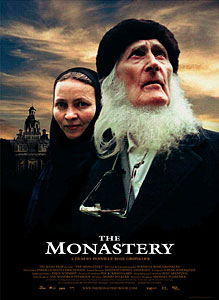
The monastery: Mr Vig and the nun


The Monastery: Mr Vig and the nun is a Danish documentary (by Pernille Rose Grønkjær, 2006) about a man who wants to donate his "castle" to russian orthodox nuns. Mr Vig is a man in his eighties, but all the same he is shuffling around the castle, doing repair work for the nuns. When the nuns finally appear, there is quite a few disputes between Vig and sister Ambrosija, who has her own ideas as to the quality of the building and what has yet to be done. These dispute tend to end with Vig's not very self-conscious ideas about the reasons to his & Ambrosija's disagreements: "Well, women are a mystery to me." "I don't like people. I liked my father, but nobody else."
This is basically a film about eccentric and strong-willed people. Some scenes are stranger than words can tell. In one scene, Sister Ambrosija is seen hunched down in prayer, chanting solemnly. Then her cell phone suddenly rings, and the ringtone is "Have a merry Christmas". She barks: "YES??" Cut!
By having investigated religion as an ordinary, down-to-earth practice, films like this one, and Gröning's die grosse Stille, have changed my perception about what religious lives may look like (or should I say: have made me aware of some of my own preconceptions). Vig himself has interestingly little to say about religion. We hear him talk about other things. The same goes for Sister Ambrosija, who is portrayed as a pragmatic manager type with endless engineering skills - certainly something that goes against the grain of my ideas about "russian orthodox nun".
The film seems to have gained some attention, as it is reviewed in places such as the New York Times, in which the reviewer laments the lack of cultural history about the role of the Orthodox church in Denmark - I disagree, if that were the project, it would become an altogether different film.

17 June 2008

Viking Line & psychoanalysis

I keep dreaming about Viking Line. I walk around, I sit in the café, I drink beer. Nothing happens, everything is ugly and time has stopped. I am with new people every time, but everything happens against the backdrop of dread and endless boredom. As I really detest being on board on the Viking Line armada, and as I always feel physically ill (not only due to drinking) when I have experienced a Viking Line adventure, there has to be some deeper level of readings of these dreams. There has to be something that these dreams tell me. The psychoanalytic-marxist reading circle that R & I have gloriously founded will help me grapple with this hard-to-penetrate mystery. Here are some suggestions:

1. I secretly want to go on a Viking Line cruise, and I am just waiting for an excuse to go. For some reason, I am unable to acknowledge this desire on a conscious level, so the dream is a safe outlet for it. The dream tells me that I have to overcome these feelings of dread and boredom by - going on a cruise. The cruise is, I guess, an existential journey; an ordeal in the Kierkegaardian sense.

2. I secretly want to work at Viking Line, just like my sister. This might, in fact, carry with it other ways, in which I secretly envy my sister.

3. Even though I, on a consious level, would deny it, I am an Åland extremist who want to move back to the isles of gold & myrrh to carry the flag of Julius Sundblom and Carl Björkman. In fact, I want to dedicate my life to writing historical accounts of the splendid past of the Åland people (who is One, weren't it for some guiling traitors). In fact, I want to set up a play about the Crimean war and the dramatic turns that took place at the Åland islands. I want to throw in a love story involving a Russian soldier & a plain, industrious farmer's daughter.

4. My dream reveal a repressed resent: I have deserted the ship building industry for more abstract academic interests. I am, would I only acknowledge it consciously, more interested in business than in academia.

5. A Viking Line ship stands for the emptiness of desire and the way desire and language are trapped in the Symbolic Order. Being on a Viking Line cruise yields the interpretation that one's desires are aimed at an unreachable objective - because no objective would fulfill them. Viking Line, in the context of my dream (and otherwise, too), points towards the emptiness and the eternal instability of the signifier. "A cruise", in fact, signifies that one has the impression of having travelled but the travelling is an ontological fraud, a going-nowhere, a play of imagination. A fundamental Lack is the deeper meaning of the logo of Viking Line: desire will always revolve around fundamental Lack: the ideology of a cruise ship is, as it were, a manifestation of this principle. The anxiety of the dream hints at this. To sum up, my Viking Line dream shows in what way "the Real resists symbolization".

15 June 2008

philosophers

I've come to realize how lucky I am with regard to my job and my colleagues. At the other jobs I've had (I'm afraid not too many - I'm a lazy son of a bitch) I had a nice enough time with my colleagues, but I did not socialize much with them outside the limits of 9-5. There was small-talk during lunch, but mostly what was said did not matter much. It was not very personal. At my present job, I regard everyone at the department as friends, and that has nothing to do with whether we meet often or on a more irregular basis. These are people with whom I can talk about anything, and I know that they will listen, take me seriously. I've learned an endless amount of things from them, about philosophy, but also about other things. There's no clear division between "work" and "non-work", in conversations or otherwise. In this setting of people, it would be slightly absurd to say "let's not talk shop" if "shop" is something other than formal things such as bureaucracy or similar matters concerning practical problems at uni.

On our way home tonight, rain falling heavily and the lights a-glaring, G said to me when we found ourselves having walked the wrong way, "this is what it's like to be a philosopher". That is, walking around (we happened to talk about "getting lost", about maps and what it is like to walk around in an unfamiliar surrounding) and being occupied in convesation to the point that one no longer pays attention to the direction in which one's feet is taking one (just like old Thales who was so engaged in watching the stars that he tripped and fell into a well).

At best, philosophy is miles away from scholarships, employment, small-minded argumentation and academic accomplishments. At best, philosophy is a quiet walk in the rain. One does not have to appear as something (intelligent, "learned", charming) but the only thing that counts is that one dares to dive into a conversation - regardless of what it is about - with an open heart and without any agendas. Of course, I have philosophical conversations with non-scholars as well. In the best case scenario, a philosophical discussion is not about "traditional" topics (as if philosophy could be described in terms of a specific set of issues) but it's often about the most surprising and unexpected things that suddenly become the object of serious (in the sense of 'honest', relentless) reflection. With many of my friends, even gossip will take on philosophical forms.

One thing that characterizes these discussions is that they are not mainly a forum for opinions, if you end by saying "that's just what I think, deal with it", then, from a philosophical point of view, there's a problem. Maybe there are conversations in which it is not a problem at all, but then they are not what I would call philosophical. In philosophical discussions, an appeal to facts will count to nothing, if facts are taken as "this is just how things are". I want to employ a cliché by saying that philosophy is aimed at clarity, not "knowledge about particular states of affairs". But this way of expressing it carries certain risks, and might lead to some misconceptions (that philosophy is not about the world, about ordinary things).

I think I've learned more about the character of philosophical conversation gradually, by the years. And there's still a lot I have to learn. The hardest thing in philosophy is that one has to devote one's whole person to the conversation taking place, and that in no case is it possible to retreat to "personal views" as a defense. There's no defense if the interlocuter does not understand what you try to say. That is, in a sense, the only measure. Bad philosophy is not due to deficient intelligence - bad philosophy is vanity. And maybe laziness, a lack of vitality: one does not have the energy to throw oneself onto the hard, unpolished ground of thought. Most of all, my colleagues have taught me a lot about talking and, even more important, listening. But, as I said, I've learned so much in occasions outside the seminar room: in bars, on walks, and so on. "Professional" philosophy is, in so many ways, the end of philosophy. Professionalized philosophy will be dead philosophy, dead letters and words that come from nowhere and will end up nowhere.

13 June 2008

Auf der anderen Seite (The edge of heaven)

I watch a lot of movies these days. It's summer, and there's too much light for my vampire life. I went to the movies tonight to watch Auf der anderen Seite and I liked it just as much as I've liked Fatih Akin's previous works (Gegen die Wand, Crossing the bridge).

Auf der... is a political film. But it is also a love story. Two stories are told, and they finally blend into each other. He's treading a dangerous path here, Akin, as the film could easily have come out as mannered and, well, too self-conscious. Even though a lot happens in the film and the plot contains many dramatic turns, I wasn't really thinking that the whole thing was an attempt to manipulate the viewer into Great Emotions. The emotions it did evoke - endless grief - felt real enough. At least that's what I thought. Akin's characters are richely described, never simplified into clichés, and the cinematography bustles with life, just as the characters.

One of my favorite scenes of the film involves a dispute between one of the main characters, a Kurd activist, Ayten, and her lover's mother. Ayten walks into the kitchen and lights a cigarette. The mother, who doesn't seem to approve of her daughter's choice of partner, tells her she can't smoke inside. The mother inquires Ayten about her life situation, and she tells her she's a political refugee, that she is an activist who works for human rights. In a dry, know-it-all, glossing-over kind of voice, the mother tells Ayten that everything will be better, once Turkey joins the EU. Ayten snarls that EU will change nothing, as EU is led by colonial powers such as France, England and Germany. For some reason, I found that to be a really powerful scene - one out of many, that brings politics back to a level of ordinary conversation & real lives.

Akin pays attention to details, to the small things that matter, and that's what makes a film like this, with a quite - if I may say so - melodramatic plot - work. If any other director would work with this material, I'm not sure what the result would be. I'm glad that our otherwise totally crappy, business-minded movie distributors had the good taste to let Finnish audiences enjoy this gem of a film.