 Yngwie ... we ... waited ... for ... so .... long
Showing posts with label oddities. Show all posts
Showing posts with label oddities. Show all posts
11 April 2009


9 April 2009
Ryska och sovjetryska
Jag försöker ihärdigt gräva fram mina ryskakunskaper. När jag bläddrar i mina gamla skolböcker slår det mig hur mycket bokserien som skrevs under sovjettiden skiljer sig från de ryskaböcker som gavs ut under nittiotalet (de senare användes i mina gymnasiekurser och även om den första boken kom ut på finska på åttiotalet är det inte mycket sovjetigt med den). Redan fotografierna, eller inställningen till fotografier, skiljer sig åt. I de sjuttiotalsproducerade böckerna -TROJKA - (som reviderades lite på åttiotalet) är det grådaskiga bilder med hyperrealistiska teman som gäller. Traktorer, lastfartyg, stelfrusna människor på busshållplatser, ödsliga höghus, sammanbitna arbetare som när det är som allra roligast spelar schack eller bygger modellbåtar. Det är....grått. När man ser på de här bilderna står det klart för en att i Sovjet, där sken solen aldrig. Lika lite som i vissa polisfilmer. På nittiotalet, i POSJALSTA, däremot satsar man på att presentera grönskande datjor, spacklade, leende kvinnor och allehanda ryska matläckerheter. Ryssland framställs fortfarande som lite "exotiskt", men det är inte det gigantiska sovjetimperiet som presenteras.
Det som är mest fascinerande med sovjetboken (som är del ett i en bokserie på tre) är faktarutorna som ska förse en med matnyttigheter om Sovjetunionen. Man betonar landets diversitet. Nybörjarstudenten får lära sig att prisa de sibirska bergen och att tala om fabrikerna i Magintogorsk, Tjeljabinsk och Sverdlovsk - där byggs det bilar, motorer och traktorer som kommer väl till pass för kolchoserna! Man får läsa följande: "Ukraina har såväl gruvor och tung industri som ett högt industrialiserat jordbruk. Republiken producerar mer än en fjärdedel av all mjölk och allt kött i SSSR. Den är världens största producent av sockerbetor." Det är något med den här beskrivningen av det högt industrialiserade landet som idag framstår som otroligt antikverat. Om man vill presentera ett land och framhäva något intressant, då är det inte längre - tror jag - sockerbetsodlingar som man tar fasta på. Och den grådassiga bilden av en ändlös rad av skyskrapsboxar känns inte heller som något man skulle se i en lärobok idag.
I Kirigistan, får vi veta, finns Sovjetunionens högsta berg. Berget heter Pit Kommunizma. Undrar om det har bytt namn?
Förstås är det så att också många av bokens ryska fraser bär spår av sin tid. Där man i nittiotalsboken får bekanta sig med personer som är skådespelare och businessmän, är det i sjuttiotalsboken fabriks- och kolchosarbetare som står i centrum. Och alla kvinnor är lärare. En del roliga fraser, som pionjärernas motto, får man lära sig: Pioner, k borbje za djelo kommunistitjeskoi partij - bud gatov! ("Pionjär, var redo till kamp för det kommunistiska partiets sak!") Pionjärerna var ungefär som komsomol: en scoutliknande rörelse för barn där syftet var att bygga upp små sovjetmedborgare till både kropp och skäl (bl.a. skulle pionjärerna uppfostras till arbete). Ett av kapitlen handlar om små barn som är på pionjärkoloni - deras uppgift är att vara arbetshjälp i byggandet av en ny stadion. Det ökande västerländska inflytandet i sjuttiotalets sovjet kommenteras torrt i en inforuta: "Grammofon eller kassettbandspelare, liksom jeans och modekläder, drar till sig ungdomens intresse mera än äldre generationers ideologiska diskussioner och revolutionära sånger." Vladimir Iljitj gråter vaxtårar där han ligger.
Ryskaläroboken från sovjettiden är full av små fakta som på något sätt är väldigt talande. Som att bokbutiken i Moskva som dåförtiden sålde utländsk litteratur hetter 'drusjba' - vänskap. Eller fenomenet 'subbotnik' - frivilligarbete som utfördes vissa extra högtidliga lördagar. Eller som att det på många/de flesta arbetsplatser fanns något som kallades "krasnij ugolok", den röda hörnan - med de obligatoriska porträtten av Lenin och Marx. Där kunde man spela spel, läsa tidningar, samtala om politik. Nu undrar jag varför det inte finns en röd hörna på min arbetsplats?
Och så avundas jag (skolboks-)sovjetmedborgaren en annan sak. Jag vill också åka på semesterhem! Till Krim!
4 February 2009
Artaud
"All writing is pigshit.
People who leave the obscure, and try to define what goes on in their heads, are pigs. The whole literary scene is a pigpen, especially this one.
All those who have vantage points in their spirit, I mean, on some side or other of their heads and in a few strictly localized brain areas; all those who are masters of their language; all those for whom words have a meaning; all those for whom there exist sublimities in the soul and currents of thoughts; all those who are the spirit of the times, and who have named these currents of thoughts - and I am thinking of their precise works, of that automatic grinding that delivers their spirit to the winds -
are pigs."
I'm reading Deleuze. He (and his militant buddy Guattari) quotes this kind of thing. Poor pigs. Poor me. Poor us. Poor trains of thought.
2 February 2009
Amazon recommends me....
 Amazon.Uk advises me to buy this book. How to lead by Jo Owen. "Owen dispenses with management-school jargon and education babble and cuts right to the heart of the matter, breaking leadership into four areas: foundation, practice, mastery and the leadership journey. In each area he spotlights a number of features: focusing on people, being positive and being professional. Additional topics in each area address leadership from the entry, middle or top levels." EACH SECOND OF LIVING WITHOUT THIS BOOK IS UNBEARABLE! I can't take it anymore. GIVE ME THIS BOOK TO DEVOR NOW! I really need to learn about those four areas of leadership, I do. I WANT TO LEARN HOW TO LEAD! (Leading is fun! It has to do with people! You need to stay positive! Be a professional!)
(Book-cover: neo-fascism. That's all.)
25 January 2009
Are you afraid to die? - The Louvin Brothers

There's a surge of old country and gospel in my (digital!) record collection. I like everything from cheesy oooh-oooh and pom-pom-pom choirs of overproduced late 50's and early 60's country pop to god-fearing gospel of the forties. There's a place in my heart for George Jones, Patsy Cline, Faron Young and Buck Owens (and the Buckaroos, naturally!). I love overblown string orchestrations and the fiddles that are thrown in for good measure in some songs. Spoken love-lorn lyrics about death and longing. Who can resist classic lines such as "There's a tear in my eye / it's not water"? Nobody, that's who! (Tougher stuff like Hank Williams is fantastic, too, but in a somewhat different way)
The Louvin brothers, Charlie and Ira, started making gospel music in the forties. Their real name is "Loudermilk" but "Louvin" was apparently easier to pronounce. They're from Henegar, Alabama. In the mid-fifties their style was widened to include "secular" material as well even though they have little in common with the sound of more pop-oriented acts. They even toured with Elvis in the beginning of his career. There were lots of "brother-duos" before them, so they were not a one-of-a-kind phenomenon. Their perhaps best known album is Satan is real from 1959. The band split up in 1963. Ira died in a car crash in 1965 (along with his 4th wife). His brother went solo.
She picked up that silver dagger
and plunged it through her lily breast
Saying "Goodbye Mama, goodbye Papa,
I''ll die for the one I love the best"
Nick Cave's Murder ballads is a funny collection of murder ballads. You don't take these songs seriously. The Louvins made murder ballads, too. But instead of tongue-in-cheek, the style they pursue
 is grave and direct. The same goes for their religious material. Titles such as "Kneel at the cross", "The Christian Life" and "Leaning on the everlasting arms" speak for themselves. Their songs have been covered - by the Byrds, Gram Parsons and Emmylou Harris, among others - but these artists make the songs their own. Ira & Charlie sing in close harmony, a style that pretty much resembles The Everly Brothers. But, be warned, there's hardly any puppy love to be found here:
Are You a stranger to God?
carried away by your pride?
tell me sinner did you ever step to think
Are you afraid to die?
What are The Louvin brothers? Their music makes me smile ironically. I laugh at the campy cover art of Satan is real (a plywood Satan). How can that stuff be serious? But the music of The Louvin Brothers is spooky, it crawls under your skin and you start wondering who the hell these folks are. Ira was an alcoholic, according to one source "He sang like an angel but he could be as mean as a striped snake, almost as famous for his drunken, mandolin-smashing tantrums as for his hair-raising tenor." Charlie was more of a business man who has kept up a prolific career for many years. The band members is a mystery, but then there's the question: who listened to The Louvin brothers? How did their contemporaries receive them? Did rock n' roll kids appreciate them? Were they favorites among worshipping Christian? Was their music heard as the white robed men got ready for a KKK rally? Or did Ira & Charlie provide folks with a quick jesus fix before hitting the bar? In what spirit did people listen to them? I know there's a lot of religious themes in pop in the US and elsewhere, nothing strange about that, but this is something different. It's how the stern message and the sometimes jaunty sound of the songs create highly contradictory music ("....you can't find the lord too soon!" is a really, really strange song: chipper barrelhouse piano combined with lyrics bemoaning the fallen state of man....).
It's their attitude that spooks me. Matter-of-factedly, they croon about redemption and judgment day. Something ain't right in these songs. I don't get this feeling by The Carter Family, for example, whose music seems to be quite uncomplicated, earnest gospel. But the Louvins! The singing is so sweet, twangy, yet stern, while the arrangements (mandolin!) stick to the basics. I mean, they look so tidy! I start imagining things. The Louvins snorting a line. The Louvins at the strip joints (never parting ways). The Louvins in a chicken race. The Louvins on a merry hunting trip. The Louvins watch soap operas while tripping on pills ("man...satan is real!" - maybe that's how the
 idea for the album cover was born).
If I ever write a novel, it will probably be about the Louvin brothers (there's already a biography). For some reason, they kickstart my imagination. But does this music bemuse me & confuse me simply because I know nothing about the tradition of gospel music?
Satan is real
working in spirit
you can see him and hear him
in this world every day
satan is real
working in power
he can tempt you
and lead you astray.
(there's a youtube clip of a Louvin brother performance and a clip from a radio show!)
19 January 2009


16 January 2009
Hair metal from the 80's - part two
So I know my dear readership is bent towards the philosophical. This one is for you fuckers. Subtle & sublime, the way we like it.
12 January 2009
Word of the day
covet
(v): wish, long, or crave for (something, especially the property of another person)
(v): wish, long, or crave for (something, especially the property of another person)
30 December 2008
Broderade bonader och kuddar!
Mera Malax-Tv!
Synd att det blev så kortfattat om de där kuddarna.
Och så Twin Peakstema!
TV Åland skulle kanske förtjäna sin plats i Youtuberymden?
Nu finns det även en hemsida!
PS: Med denna rubrik förväntar jag mig att bloggen översvämmas av googlebesökare!
Synd att det blev så kortfattat om de där kuddarna.
Och så Twin Peakstema!
TV Åland skulle kanske förtjäna sin plats i Youtuberymden?
Nu finns det även en hemsida!
PS: Med denna rubrik förväntar jag mig att bloggen översvämmas av googlebesökare!
26 November 2008
Hair metal from the 80's - part one
This was exactly what I suspected. Political debate nowadays does not take place in The New Yorker or some other fancy newspaper. You find the most serious expressions of concern for contemporary politics in the Youtube comments field for White Lion's hit song "When the children cry". What lyrical depth! A most intricate melody! (If you don't know who White Lion is, fuck off)
latinmass9000 (2 days ago)
I guess the Supreme Court and the government should declare this song as "Unconstitutional" because of the words: "one united world under God." How true does this song seem now that Osama Bin Ladin won the election in the US.
Blo0dyKnight (1 day ago)
You mean Barack Obama, fucktard, he didnt get elected for no reason
latinmass9000 (1 day ago)
I know what his real name is. I was only calling him by his socialist name. Retard.
Blo0dyKnight (1 day ago)
sorry man, i thought you were dissing him
latinmass9000 (1 day ago)
Oh!! But I was. You see, we now have a socialist/terrorist as the 44th President of the US!!!
Blo0dyKnight (19 hours ago)
oo , in that case, fuck you latin..... OBAMA RULES
2 November 2008
a blog with a beard
I want to mention a blog I found recently. It's called En man med ett skägg and it carves out the love we all have for Snoddas, Tage Erlander, "Cacka" Israelsson and other names written in stone in the history of Swedish entertainment & politics. En man med ett skägg is obsessed with old men. He brings out the desire that some of us secretly nurse; to be a 70-year old man. I put on the slippers, sip on the night cap of single malt Scotch and indulge in reminiscence, recalling the days when Thore Skogman was the hippest cat around and the parliament was united in a concern for the laxing morals of the youth. My favorite posts so far in the blog quote the eerie memoir of a (in)famous Swedish lawyer, Henning Sjöström. Read all about Henning's adventures here and here.
31 October 2008

13 October 2008
The bloody imagery of 19th century methodism
I'm reading E.P. Thompson's historical account of the English working class. It's a fun book that covers all kinds of issues and phenomena. At the moment I am skimming through his elaboration of the relation of methodism (a religion of exploiters and exploited alike) to ideas about discipline and labour. His point seems to be that the language of methodism was used in order to prop up the horrid working conditions of early industrialism with religious talk about "the virtue of labour". His book includes a section - this guy is a sucker for digressions - in which he discusses the religious imagery of early 19th century methodism. He points out the sexual connotations of "Satan" - a penis - and Jesus - a womb or a vagina in the oblivion of which the wrecked sinner takes comfort. The love affair between the sinner and Jesus is depicted as a very disturbing one. And then there's the blood. Thompson quotes some hymns:
We thirst to drink Thy precious blood,
We languish in Thy wounds to rest,
And hunger for immortal food,
And long on all Thy love to feast.
In one of his priceless concluding remarks, Thompson (who has little sympathy for 'apologetic secularists') writes: "To labour and to sorrow was to find pleasure, and masochism was 'love'." (Thompson 1968, p. 409) - From this point of view, he says, it seems completely natural that the only worthy occupation from a religious point of view should be one that involves pain and repulsion. Grace is to be found in torture and abasement. Mr. Wesley himself praises the beauty of death in the following manner:
Ah, lovely appearance of Death!
No sight upon Earth is so fair,
Not all the gay pageants that breathe
Can with a dead Body compare.
(ibid. p. 410)
7 October 2008
Good and evil, an absolute conception: Twin Peaks ontology

In Twin Peaks, even leaves rustling in the wind evoke fear. I'm sure you remember the scene in which Laura Palmer's funeral has gathered the town folk. The scene starts, I think, with the rustling leaves. We see it for a good while, and there is the sound, too. Silence. The feeling I get is that something really bad is happening here. It's not clear what this fear is about, or whether it's about anything at all. It is not necessarily the fear of something "behind" the trees that disconcerts me. I am not necessarily anticipating some terrifying beings hiding in the woods. The deserted traffic lights have the same effect on me. Unsettling, but not in the sense that I could pin down any element in the image that has this specific frightening effect on me. Nature, and human artefacts as well (the rubbled train wagon), are emedded within a feeling of being surrounded by something evil, a feeling of being seen. The elusive owl that is BOB. Watching Twin Peaks for the first time, I remember that it was this indeterminacy that intrigued me about the world of Twin Peaks. Evil takes on many shapes and forms and the relation between these different images is never settled.
 BOB is the incarnation of evil in Twin Peaks. One of the first things we see of him in the series is his sudden entrance in Sarah's vision. Our fear meshes with that of Sarah. I'm not sure if I know what BOB is. BOB's face is always contorted, as in a state of gruesome ecstacy. Grinning, screaming, gripping on to something. M suggested that his face expresses some crazy form of joy. That is interesting. Does the demeanour of BOB convey lust? What would it mean to say that it does? I'm not sure what kind of concept 'lust' is, what form of attitude we take to something when we perceive something as 'lust'. BOB is the lust for destruction, the lust for nothing in particular, the lust of consumption (in the sense of people consuming each other like food). BOB consumes his host body and his victim. BOB embodies a certain image of male sexuality as a blind, unstoppable, destructive force of nature that possesses a man in the form of an evil spirit and transforms him into unrecognizability. BOB is nourished by killing, BOB feeds on the familiar body and does with it what he wants. His single drive is to induce suffering and pain. My associations drift towards Freud's concept of 'thanatos'.
The evil as a mystic force is perhaps the most common picture in films depicting the staggering, entranced psycho killer roaming the streets for prey - the prey is usually a girl, usually with some specific characteristics fetischized by the killer (H suggested something to the effect of evil being a form of fetishism, I am ready to agree with that to some extent). Twin Peaks explores this theme, too. Even though BOB has much in common with the other-worldliness of the killer in mainstream horror movies, Twin Peaks develops this theme and in this I find something interesting.
BOB is a reality of its own. Twin peaks does not really make clear its nature. The residue of The Black lodge comes across like a form of perpetual restlessness; the non-space in which every room resembles each other. BOB is glimpses of fear breaking into the common world of goodness and relations. In the last episode of season one, when the murder is resolved and Leland has committed suicide, Coop, Albert and Sheriff Truman engages in a discussion about BOB. BOB is, they seem to agree, "the evil that men do".
BOB is a manifestation of the thought that evil is, in some sense, not a part of ourselves, but that it preys on us, eats our soul, possesses us. For that reason, I was always a bit perplexed by the attempt to explain Leland's transformation by his encounter with the "real" Bob. The ontology of Twin Peaks displays some manichean tendencies: the good and the bad are two separable entities, two modes of reality, existing, as it were, on a par as two forces. What is so scary about BOB is that he is not motivated by anything. He is, in a way, "abstract". He is simply driven. BOB's consummation of his victims could be said to be a very straightforward picture of the theory of lack as developed in psychoanalytic theory: a form of eternal incompleteness that has to take possession of something; both an object and, if you will, a host body (I would say that the movement goes like this, others might disagree). BOB's strange ecstacy/trance is captured in his dance. A most striking scene is the one in which Leland/BOB dances alone, holding the picture of Laura in his hand. His face expresses grief and some sort of crazed movement at the same time. In this scene, BOB's desire is expressed in Leland's empty arms. It is unclear at what BOB's desire is directed at, his persona signals a mere "dance of destruction".

Twin Peaks is, from beginning to end, a story about sexual violence. In Twin Peaks, violence moves on different levels and is manifested in different forms. Violence takes place within the setting of cherry pies, black coffee and delicious donuts, but also in sleazy bars and in the dark woods, not to talk about the within the walls of the "happy home". Violence crops up everywhere and it is always sudden and gruesome.
The BOB character is a force that corrupts its victim, who is possessed with something that has nothing to do with himself. But what is creepy about Twin Peaks and its "ontological constallation" is that it is the victims perpetrated and molested by BOB that are somehow blamed from attracting the sexual energies of BOB. Laura, it somehow seems, victimizes herself by leading a "voluptious" or "lustful" life. Most men seem to respond to her in much the same manner as BOB: Leo, the Renault brothers, Mr. Horne. Every male (even Coop, it sometimes seems) desires her and that desire comes out as obsessive, dark and violent. Laura worked at One Eyed Jack's. She "attracts men" and enjoyed various intoxicating substances. One Eyed Jack's is a place where men fulfill their sexual fantasies and let loose their sexual drive. From this point of view, the sexual violence of BOB is not essentially different from that of other men. Everyone, in various degrees, in Twin Peaks, is possessed by some strange force. Some internet writers have interpreted BOB as the state of original sin. That makes sense as a reading of the series in some ways, some of which I have talked about here (the predicament of the world is its inherent evil, from which final redemption is impossible - another version of The Black Lodge).
The "good girl" always seems on the verge of being transformed into "a bad girl". I am not sure whether Twin Peaks repeats the patriarchal, grotesque naturalization of sexual violence - existing in men as a potentiality (the most extreme form of which is being possessed by BOB) and existing in women as a longing for victimization. Audrey, for example, is clearly fascinated by the murder in other ways than grieving a friend. Her desire to gain entrance to One Eyed Jack's is very ambivalent. One dimension of it is her challenge of her father's authority, but it is not the only one. ("The world of men" is not only the world of Mr Horne and his colleagues - a world in which women have gained entrance partly as sexual figures - but also the world of the Bookhouse boys, an image of "safe&sound masculinity" - or not.) But despite this, I would hesitate to say that the women in Twin Peaks are mere objects. They are subjects fighting in a world where they are turned into objects and in which violence is a ubiquitous threat.
The transformation Leland/BOB is one strand of season 1, but there are other transformations too that are marked by "movement of desire": Donna-the-good-student/Donna coming out as a "foxy lady", Nadine-the-failed-hausfrau/Nadine-the-reborn-teenager and, of course, Madeleine/Laura. If you look into in what precise way women are sexualized in Twin Peaks, I'm sure you will notice some interesting patterns.

The (perhaps only) man falling outside the scheme of "potential rapist", Big Ed, is presented as being controlled by his crazy wife Nadine. "Those drapes, Ed!" Ed is solid and good, there is no hint of violence (in the sexual sense) in him. Ed might be the only person who is not possessed by some dark desire. Everything he does seems direct, honest and open.
I definitively find sexual violence being depicted ambiguously in Twin Peaks. There is a clear sense in which the world of Twin Peaks (in just the same way as the world of Blue Velvet) is awaiting disruption. This is not saying that Twin Peaks is also about friendship and goodness. But the ambiguity is there. As it turns out, even Cooper, a gentlemanly, generally chaste character, is, by means of his desire for Annie, a proper object for BOB, who possesses him in the last episode. Is the logic of Twin Peaks that men's desire for women turn them into monsters? That could be interpreted as both a disturbing enchantment with regard to heterosexist ideology and the unravelling of a dimension of that same ideology.
16 September 2008
worst song Ever made (or "how silver-haired emptyflow learns stuff about pop culture")
I'm trawling the dagens skiva forum every once in a while. It's fun. There's always vendettas and trolls and what not, and in between, some music discussions. At the moment, there's this "worst song ever made" thread counting down. Ulf Lundell, Van Halen, Meat loaf, Per Gessle, Michael Bolton. Fucking Trance dance! (Do you remember them?) The dark side of our unconscious - I'm starting to think processes here, actually - discloses its seedy secrets.
What can beat that kind of music in terms of repulsiveness? Yes. One of the posters actually has an answer to that fundamental-ontological question. The answer is "I kissed a girl" by Katy Perry, a pretty contemporary track, I reckon. I wasn't familiar with it from before, so I googled the song, and the concept of the male gaze has never taken on such a concrete meaning as I watched the video (oh, well, half of it). The lyrical badness - or what is your verdict on, I quote, "I kissed a girl just to try it/I hope my boyfriend don't mind it [...] No, I don't even know your name/It doesn't matter/You're my experimental game/Just human nature/It's not what, good girls do/Not how they should/behave/My head gets so confused/Hard to obey? (Is this song popular? I hope not. I don't know about these things.) I can see it in my head. Professional "song writer" (Max Martin style), 35++, interests: "art & design & cooking (= fast cars and girls)", sitting in his glass & steel, designer, § 1,0000000000000000000 office, distractedly looking out the window, thinking, "hmm....I have a contract with these guys....I have to come up with something pretty soon.... Hey! I'm gonna write a song about a girl who.....kisses a GIRL! Nnn---iiice. Jimbo will dig this, he will." He has forgotten his cocaine & his voodoo dollz & a yellow mouse called Gerald at home that day, so the result is not quite as ingenious as what the potentiality of his artistic abilities might someday trigger him to create. Maybe, someday, aided by the grace of our Lord, he will write a new "Baby this is teh key to my heart". Good luck.
What is it with kids today?? When I was young, our radios and cassette players were blasting.....Trance dance...."You're gonna get it". And Van Halen (David Lee Roth's bikini girls). And later on, Haddaway and Meat Loaf. But I actually prefer bombastic "I'd to anything for love" or the straightforward moronic "NoNoNoNo, There's no limit!" a million times to "I kiss a girl, is that Ok for my boyfriend??? I am such a baaad girl." On wikipedia, I learn that this songs, along with another, called - bear with me - "U'r so gay" - has roused some attention for being homophobic.
I know it's cheap to snigger derisively at things in this way - haven't I got anything more substantial to say? (= no) - but this shit makes me mad.
7 September 2008
Medvedev
This interview with Dmitry Medvedev is truly scary (plus some of the comments are priceless):
25 August 2008
Röikfisk å rulltårta - Malax TV
Y told us about Malax TV. I don't know what to say. My brain is splattering out of my head, my eyeballs are popping out of their socks. I'm having a stroke.
"Eh... En nyckel har upphittats idag .. eller ikväll ... vid Metropollis pizzeria. O så här ser den ut. De e antagligen en bilnyckel eller eventuellt en traktornyckel. Den finns här ... Och kan återfås"!
- Handlar ni ofta här på s-market i ö malax?
- bara cider.
- eller trä...?
.... [indecipherable]
- tycker du de e trevligt när dom ordnar hästmarknad?
- va sa du nu?
- om det är trevligt när dom ordnar hästmarknad?
- jaa...de veit ja inte... där e nån billi vietnames tycker jag, men.... han går nu!
- kaffe serverar dom väl?
- ja, i dropp. ... så vi har de klart.
there's an archive of stuff at http://www.malaxtv.fi/. for me, this finding signifies the end of all depression and boredom. Whenever I feel down, I will watch some Malax TV.
27 June 2008
The conet project
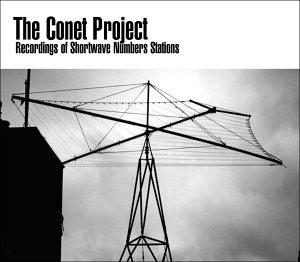
In an earlier post, I wrote about Icebreaker (sometimes Icebreaker international) and their concept albums about NATO and free, global trade. Well, I appreciate these albums, both because of the music itself and the way the concept is transformed into music (I don't know, maybe a distinction like that is artificial).
Now, I happened to come across a review of The conet project. I downloaded it, and started listening. There's four records, and the first track begins with shortwave radio noise, an eerie music box melody, and a girl counting from 1 to 5 in German and/or Swedish. The next tracks are similar: noise, beeps, a voice counting, or calling out random words that resemble letters. And there's some music, always primitive, always very, very spooky. In a weird way, it's listenable, even, if you allow me to say so, catchy, captivating, fascinating. An example: in "New star broadcasting" (from disc 1) a melody drifts in and out of the shortwave radio noise (which is, this time, quite harsh to the ears), a voice says something, but it's difficult to make out in which language she is talking. The voices of the messages sound all-to-human and non-human (robotic) at the same time. It's not Oasis, but, then again, what is? So, what's the deal?
From the all-knowing Wikipedia:
The Conet Project: Recordings of Shortwave Numbers Stations is a four-CD set of recordings of numbers stations, mysterious shortwave radio stations of uncertain origin believed to be operated by government agencies to communicate with spies "in the field". The collection was released by England's Irdial-Discs record label in 1997, based on the work of numbers station enthusiast Akin Fernandez.
One night in 1992, one of the makers of this album tuned into some strange shortwave radio messages and that's how the idea was born (source).
And it is this story that makes the music really interesting. It is immediately situated in military - & political history. In the frenzy of the cold war. One wonders: what the hell are the spies told by means of these coded messages? To go kill somebody? What's going on with the music, why is it thrown in there in the first place? Without knowing anything about the exact messages, it's an uncanny experience to listen to it.
"with a shortwave broadcast, anybody can listen, which means that nobody knows who the message is intended for."
To my great delight, the album is available for free at the label's homepage!
24 June 2008
Twin Peaks
 Nothing is as addictive as Twin Peaks. I don't know how many times I've re-watched it. Many. God, I'd do anything for a donut like that right now.
7 April 2008
Official homepage of.... North Korea??
A blog I'm reading on a regular basis linked to a Swedish site about North-Korea. On that blog, I found a link to The Official homepage of The Democratic People's Republic of Korea.
The homepage, which is in itself one of the strangest things I've seen for a while, also contains a FAQ-page. The first question - naturally - concerns the very serious inquiry of whether it is possible to buy a signed picture of Kim Jong II. And, yes, dear reader, it is! Question nr. 13: "Is North Korea a dictatorship?" And the answer:
And from the section for 'politics' in North Korea: "The basic principle in the organization of the organs in the country is the Democratic Centralism. All the power organs are elected by the masses and they must answer in front of them."
Well... 'Freedom of speech & assembly for all citizens'... I once watched a documentary about a German (or Austrian?) conductor who visited North Korea and arranged a concert with a few Korean students. The documentary did not deal with political questions directly, but it did reveal the power relations between the students and the teacher, the way the students were afraid to express themself too freely to the 'foreigner'.
Famine & poverty are not recognized. The homepage mentions a serious famine in the 80's, but since the end of the 90's, everything has been fine, it is claimed.
Curiously enough, the FAQ list also contained a lengthy reply about 'homosexuals'. North Korea has "embraced science and rationalism" and therefore recognizes, and respects, that some human beings are born with this particular genetic trait. And, in a smaller print, the homepage states:
This really seems to be an issue that the maker of the home page thinks has to be dealt with - it seems important that North Korea is presented as an open-minded and rational country, a country that nevertheless has lost nothing of its traditional values.
Here's another blog focusing on North Korea.
The homepage, which is in itself one of the strangest things I've seen for a while, also contains a FAQ-page. The first question - naturally - concerns the very serious inquiry of whether it is possible to buy a signed picture of Kim Jong II. And, yes, dear reader, it is! Question nr. 13: "Is North Korea a dictatorship?" And the answer:
No, the DPRK is a single-united-party constitutional democracy guaranteeing freedom of speech and assembly to all citizens. DPRK citizens play an active role in their nation's political life at the local, regional and national levels, through their trade unions or as members of one of the nation's three political parties, which include the Workers' Party of Korea, the Chondoist Chongu Party and the Korean Social Democratic Party.
And from the section for 'politics' in North Korea: "The basic principle in the organization of the organs in the country is the Democratic Centralism. All the power organs are elected by the masses and they must answer in front of them."
Well... 'Freedom of speech & assembly for all citizens'... I once watched a documentary about a German (or Austrian?) conductor who visited North Korea and arranged a concert with a few Korean students. The documentary did not deal with political questions directly, but it did reveal the power relations between the students and the teacher, the way the students were afraid to express themself too freely to the 'foreigner'.
Famine & poverty are not recognized. The homepage mentions a serious famine in the 80's, but since the end of the 90's, everything has been fine, it is claimed.
Curiously enough, the FAQ list also contained a lengthy reply about 'homosexuals'. North Korea has "embraced science and rationalism" and therefore recognizes, and respects, that some human beings are born with this particular genetic trait. And, in a smaller print, the homepage states:
Homosexuals in the DPRK have never been subject to repression, as in many capitalist regimes around the world. However, North Koreans also place a lot of emphasis on social harmony and morals. Therefore, the DPRK rejects many characteristics of the popular gay culture in the West, which many perceive to embrace consumerism, classism and promiscuity.
This really seems to be an issue that the maker of the home page thinks has to be dealt with - it seems important that North Korea is presented as an open-minded and rational country, a country that nevertheless has lost nothing of its traditional values.
Here's another blog focusing on North Korea.
Subscribe to:
Posts (Atom)
you must show the way
to a better day
for all the young
cause you were born
for all the world to see
that we all can live
with love and peace
no more presidents
and all the wars will end
one united world
under god