14 July 2009

Sjtjekn - Noon universe (and some comments on the magic of radio)


Noon Universe by Sjtjekn explores the concept of "Russia" (according to one/the only project member). The album is clearly inspired by the movie Stalker by Tarkovsky (if you haven't seen it you have to do it because it is, in my opinion, one of the greatest films ever made). I read about the Sjtjekn project before I heard the music. That might have been a bad thing, because I came equipped with a load of expectations as I started to listen and that might have limited my openness to what I've heard. I expected something like William Basinski's beautifully executed mash-up of found sounds, snippets of muzak, on Shortwave music. It really sounds like the Tarkovsky film (I haven't heard The River, an album that is said to be a "fuller" realization of what he tries to do here). The music is grainy and spectral, looped melodies (or something like it) appear somewhere in the background but in the forefront there is a swirl of sounds, crackle and hiss. You end up feeling tossed out in the landscape of Stalker; desolated, dreamy, alien.

There's something about shortwave radio that I find quite thrilling. The possibility to come across sounds the origin of which you have no idea (M talked about a similar (?) fascination with the use of radio in science-fiction, in Aliens, for example). I was immensly fascinated by The Conet Project, a 4-album odyssey of sound consisting of shortwave radio signals/codes. I listen to some tracks now and then and it always has an effect on me. Basinski used short wave radio sounds, too, on his album. The album was made in 1982 and first released in 1997. Even though Basinski has processed his found sounds the feeling of found sound has not disappeared. Shortwave music captures what Stalker conjured as well: the confrontation with the unknown, the unknown as something we cannot leave in peace. The Unknown: digging into ourselves. Sounds that drill their way into the consciousness of the listener (på svenska: ljud som molar, engelsk översättning?).

Sjtjekn is "at least" one member from Testbild!, beyond that, I know little about the project except what I've read here. Noon Universe is the sound of rain, machines, forgotten melodies, birds, water. Voices. After listening to it the first time, I had a vague feeling of disappointment. Maybe Sjtjeken is too fond of its concept (spoken parts from Solaris and Stalker are included)? Too eager to bring together the kind of nature-meets-rust aesthetic that Tarkovsky is a master of exploring? But now I am more positive. You just have to let go of some of the Tarkovsky images and listen to the music with an open mind. It's....pop! Tarvovsky pop twinkling with invention. In the Jet set junta interview, Petter Herbertsson says:

"Vissa passager på skivan är helt improviserade, medan andra är strikt komponerade. Alla melodier skrevs för att låta så ryska som möjligt, eller snarare min personliga version av ryska melodier. Jag frågade en emailkompis som heter Dimitry (som även hjälpte mig med de ryska titlarna på skivan) om han tyckte att musiken lät rysk, men den frågan svarade han aldrig på, och jag ville inte tjata."

13 July 2009

Canyon - Fever

I'm sitting at home. My ear-drum is wasted as usual and my writing efforts are increasingly futile. This day is no good and I knew it when I opened my eyes this morning (only to close them again). Waking up / falling asleep / waking up from nightmare # xxxx. I have to do something, I think to myself. But what? My head is spinning from the ear infection. I make coffee. I drink coffee. Clouds outside. Heaps of clouds. It's hot/cold/hot. Can't decide. I feel like shit. I skim through some passages of poorly written text. Goddammit. I push the DELETE button. I push the UNDO button. DELETE, UNDO, DELETE. More clouds. I text you to say I can't make it tonight. A nap. My room is too little to wander around there. Despite ear condition, I put on some music. NO NOT THIS ACID JAZZ SHIT. Turn it off. Change music. Canyon: Fever. Good pick. Spacious music. Feel like walking among mountains. Grand fucking canyon. My one ear digs the perpetually droning echoes of the guitar (reverb I've been told). My other ear creates some ambience of its own. To say that a piece of music is soothing may give you Alain de Botton ideas. Forget these. Canyon is soothing music. Canyon is actually a Danish guy, Mikkel Valentin Dunkerley. Other drone/folk/----core bands might do similar things, but somehow this album builds up a very distinct atmosphere - it creates a world of its own. If you like the spookiness of The Caretaker, the movie Last year in Marienbad and/or Gerry, try this!

12 July 2009

Antichrist (2009)

I was curious about what Lars von Trier has been up to lately so I went to watch his latest movie, The Antichrist. It surely has been accused of being misogynistic and now, having seen it, I must agree.

The story: a therapist and his academic partner looses their small child while immersed in sex. She is grieving; he is applying his therapist's skills to her grief. They travel to the woods because that is the place that she says she fears the most. He wants her to open up to the fear. Their place in the wood is no paradise. This is an unsettling place where nature itself seems to be evil. And she gradually becomes a part of this great, mysterious Evil.

Antichrist is not misogynistic in the Strindbergian sense. von Trier has put together a cinematic nightmare in which women are evil creatures who will submit to no Man's comforting attempts towards Understanding (or Therapy). I don't think this is very interesting (Strindberg, at least, is interesting even though he might have been a douchbag) because von Trier just plays around with these clischés (oh! mother/whore/witch/baaad mother! inner nature & nature-nature!), he doesn't do anything more than that. So NATURE is evil and NATURE is somehow .... Woman. "Nature is Satan's church". Female sexuality is "dangerous", a warped, evil force of nature... Bored now! I didn't find the movie any more appealing or thought-provoking from a technical point of view. And if this is to be the great battle against the dream/nightmare of Rationality, then, I don't get it. Some critics impressed by Antichrist have said that von Trier has successfully elaborated on his own Inferno and perhaps even a cultural Inferno. But I have difficulties in seeing how this movie really addresses any deep afflictions at all. We do tend NOT to be afflicted by CLICHÉS. Clichés might be symptoms of afflictions however and I tried to see von Trier's film in this way but failed to see what these stereotypical and crude (but oh so aesthetized) images would confront us with. I don't want to say anything about what von Trier himself thinks about women, that is not interesting.

I know von Trier is no stranger to kitsch and over-the-top stuff in general, and that was not my problem with Antichrist. It was just that the kitch stuff (witches, a talking fox, lots of gore) didn't seem to have any purpose.

There were a couple of beautifully shot scenes, but those few moments didn't for sure make the film's end credits dedication to Tarkovsky less a joke than it appeared to be to me. Tarkovsky this wasn't. Pompous B-movie was what I thought of it. It wasn't so much that I was outraged by the violence in von Trier's film, but the whole thing seemed rather pointless to me as I couldn't make out what von Trier was trying to say with it.

El Sastre (2007)

El Sastre (2007) is a short film about a grumpy tailor and his assistant that I happened to record from TV a few months ago but I didn't watch it until now. It is a great little film with moments of sheer brilliance, revealing the day-to-day friction of human communication. Films/documentaries about work usually focus on either the dignity of or the hardship of work. This is something else. I like that. Watch it if you find it!

10 July 2009

Pajunen

Följande från dagens Husis:

Helsingfors stadsdirektör Jussi Pajunen har offentligt talat för att tiggeriet i Helsingfors borde förbjudas. Nu hoppas han på att polisens pågående kampanj effektivt kan få bort tiggarna ur staden.
– Jag hoppas på att vi blir av med det här professionella tiggandet. Vi kan visa att tiggande inte hör hemma i vår kultur.

Lägg märke till "professionellt" här och den rörelse Pajunen gör med det här begreppet. Pajunen vill se ett kulturellt problem som myndigheterna ska råda bot på genom att sätta tydliga gränser för vad som tillhör Vår Kultur. Man undrar hur (och om?) Pajunen tänker här.

9 July 2009

gösta and sture abroad, part II


on doing wittgensteinian philosophy

In order to be a good wittgensteinian philosopher you have to be something of a masochist. You really have to love pain, shame, misery and looking at yourself from the worst perspective. I am writing a text about work and necessity - about the very strange and metaphysical distinction between "necessary" and "voluntary" that tends to pop up when one is philosophizing about work. Metaphysical, that is, when it is presented by freedom-loving philosophers. There's plenty of them. I'm thinkin': heck, I can look through all of that georgebushist-crap. Yes, I can. So, in one passage, I try to explain one particularly sympathetic aspect of early Marx. And I try to describe it so that it does not get hopelessly stranded in the kind of distinction I try to shoot down. That's why I am really frustrated when I can't do this. Not because I want to save Marx' ass. (That would be boring.) But because I want to bring out the richness of the concept of work being "expressive". I am stuck. I am stuck in this freedom shit. And, admit it, that's what progress is when you're in this business of doing wittgensteinian philosophy. To be entangled in a mess of trouble that is completely your own. OhhhAhhh. Feels so goooood.

6 July 2009

The Visitor (2007)

The Visitor was shown in cinemas here a while ago but I forgot to go see it, even though my sister talked about it a few times. It really is a good movie.

The widowed main character, Walter, is what harsh managerialists would call "dead wood" - he teaches, but without enthusiasm. He is tired and has no interest in his job. Against his will, he is sent to New York to attend a conference. While entering his apartment (obviously, he has his own place) he notices he is not alone. Walter's landlord obviously has noticed that Walter does not visit the place very often and Tarek, an illegal immigrant from Syria, and his girlfriend Zainab, from Senegal, now live there. Walter is a stiff man. The initial encounter with the new inhabitants is excruciatingly embarrassing but he offers them to stay in the apartment. Walter gradually befriends Tarek, who is a drummer. Zainab is more suspicious. Tarek teaches Walter how to play. Walter slowly comes to life. One day, Tarek is arrested for a petty breaking of rules that no "American" would have been arrested for. As he is illegally in the country, this is a serious situation. Walter's colleague repeatedly asks him to come back to Connecticut, but somehow it is impossible for Walter to go back.

The scenes in this movies worked as snapshots: short, just hinting at the story that was unraveled. I found many scenes very powerful and the pace of the film was pleasantly slow. Especially the way scenes were cut was, in my opinion, quite unusual, as the director decided to focus on many silent, although very expressive, moments that revealed the character of the relationships. The character of Walter was quite successfully developed and the actor Richard Jenkins is very good, I think (I didn't even realize he's the guy playing Nathaniel Fisher SR!). The widower who initially had lots of problems with himself wasn't, I would say, a caricature (neither were Tarek & Zainab reduced to "Culture"). His "goodness" was not transformed into cheery heroism. He could've become "the good American" whose malaise was saved by "oriental energy" but if you ask me he didn't have that function of "conscience-prozac" and the film didn't fall into the latter trap either - even though some scenes were a little too smooth for their own good (Walter sitting in the park, happily pounding the drums - was a bit over the top because of the specific things the scene focused on). I think the film dealt with its major themes - chance and sudden friendship - in quite a beautiful way.

Clearly, The Visitor is a political story. The rules of immigration and deportation and the dealings of public authorities are depicted as cruel and legalistic. I'm not sure what American reviewers made of this. But could the movie have been "harder" on its viewers? I'm not sure, I'm not sure. It is obvious that the political theme is only one of many. And maybe there is something fishy about the way the focus of the film is clearly Walter. Not Tarek or Zainab. If I were to be hard on this movie, I would say that the topic of illegal immigration is simply fluff. But I'm not sure if I want to say that, either. I don't know what to think about this right know. Have I been tricked into something?

This was also a very different movie than The Station Agent that Thomas McCarthy directed a few years ago.

Ordförande Persson


Lustigt nog såg jag Erik Fichtelius' dokumentärserie Ordförande Persson samtidigt som jag plöjer igenom Jung Changs biografi om Ordförande Mao. Där det senare porträttet är uteslutande obehaglig läsning är den fyradelade dokumentären om Göran Persson riktigt underhållande samtidigt som den ger en bra bild både av Persson och det politiska klimat som gör en Persson möjlig. En del av mina bekanta har förundrats över min stora fascination inför Sveriges förra statsminister. Och jag måste krypa till Kanossa: den stora behållningen med Ordförande Persson är ofrivillig komik som Persson ständigt ger upphov till genom sina "kontemplativa" analyser av politiska situationer och kollegor i branschen. Men egentligen skulle Göran Persson kunna läsa ur telefonkatalogen och det skulle vara roligt det också. Göran Persson levererar omdöme efter omdöme där andra politiker beskrivs som "jävligt dåliga" (om Carl Bildt) eller "inte direkt kossan ----s danskavaljer" (om Per Nuder). Många politiker beskrivs som dåliga "tänkare", som dock är utmärkta "agitatorer". Det råder däremot inga tvivel om var Göran Persson själv ser sin styrka. Han erkänner att han inte alltid når ut med sitt budskap på det mest slagkraftiga sätt, men tänkandet och de politiska analyserna är det inget fel på. Som Johan Croneman surt påpekade i DN när det begav sig är det här kanske ingen avslöjande dokumentär politiskt sett. Nä, kanske inte, men som maktfullkomlighetsstudie fungerar detta utmärkt. Serien är full av absurda scener som den där Ordförande Persson äter i regeringens matsal dit miljöpartiet och andra icke är välkomna. Göran Persson rotar runt bland alternativen för dagens lunch. Göran Persson slår sig ner vid ett stort runt bord. Göran Persson äter ensam. Alltid ensam - aldrig ensam.

4 July 2009

gender trouble

Last night we went to J's local bar. It's a karaoke bar, you see, and I hadn't been there, and J has praised it ongoingly throughout the years. He sang Folsom Prison blues. Well I know I had it comin' / I can't be free. We had a couple of drinks and then we left. When we were already walking on the street, a big, burly man hollered at us: "so what are you? a man or a woman?" J and I looked at each other and laughed. Who was he addressing? We grabbed a pizza while the man must have dwelled deep in contemplation.

**
My sister told me the following story: A party ("kalas!") to celebrate my aunt's 70th birthday. The local restaurant. Steak and brown sauce. Our relative K is already wobbling around, visibly befuddled by drink. He was a business man, but he is probably retired now. He lives in Stockholm and he talks like Vanheden (de ska va lite stil, serrö). He approaches my cousin, who is rarely seen in the Villige. My cousin had lots of kids. Basically, I know nothing about her except that she has a bunch of them kids. Our dear K has a look at the new baby "It's so hard with them, it's so hard to see what they are. Is this is a boy or a girl?" My cousin snaps: "OF COURSE YOU CAN SEE IT'S A GIRL! She wears a dress and she's got a pink ribbon in her hair!"

**
I've been given a gender neutral Hong Kong name. Mar Leeman. The name bears the promise of martial arts skills and cool stuff in general. I'd love to mar the landscape.

3 July 2009

The Pop Group - Y


Dear friends! This is something, this. The Pop Group is maybe a pop group, if you accept that pop means delivering irresistable energy and an abundance of twisted, noisy songs with a minimum of traditional structure or coherence. Basically, Y is cool post-punk, the New York hipster branch, even though these thugs come from Bristol. Y is from 1979. Dubby, jazzy at times, and fairly often inspired by funk music, Y is not really a traditional punk album at all. But never difficult. Does not feel dated. The guitar lines are splashy and percussion is sometimes drowned in dubby echo, sometimes contributing positively to a sense of menacing chaos. The saxophone sounds play the same role as in James Chance & the Contortions - on the magnificent "Don't Call Me Pain" the saxophone howls and moans and stutters. "Don't call me pain/ My name is mystery / Don't call me pain /This is the age of chance /This is the age of chance/ Don't call me pain/ Being afraid is power......... Fire your finger in the dark" The singer, xxxx, might have inspired Nick Cave & the overall sound bears some resemblance to Birthday Party even though latter band has a polished sound compared to these scoundrels. Somehow, all of the songs seem to fall apart all the time but somehow they are glued together by this or that element.
The lyrics? Impressionist left politics, some fucked-up love songs. "Teeth beckon you / who says guns speak louder / who says guns speak louder / money's a weapon of terror / money's a weapon of terror / Spiders I can trust open my chest" - may give you a hint. But it is not always possible to make out the words because the words are usually either wheezed or shouted. The mix adds to a sense of restlessness, which is a good thing. The instruments and the vocals collapse into a jumble.
Jag läser en debattartikel i DN framförd av de röd-gröna partiledarna i Sverige och tänker på följande:

a) att politik antas handla om prioriteringar (Reinfelt och s.g.s. som alla politiker skulle hålla med)
b) man appellerar gärna till statistik även om man är en smula slarvig med siffrorna.
c) den politiska retoriken är fan i mig en av de tröttaste, mest fantasilösa, mest urvattnade, mest själlösa former av språkliga uttryck som produceras idag.

"De senaste veckorna har klargjort skiljelinjen i svensk politik. Valet 2010 handlar som alltid om det väljarna har rätt att utkräva: En utvärdering av de vallöften som givits och hur resultaten under mandatperioden verkligen har blivit. Har det blivit bättre eller sämre de gångna fyra åren?"

ps: jag menar inte att politikerna borde skeppas iväg till Biskops-Arnö. Men den här genren av texter innehåller helt enkelt noll reflektion och hundra procent "det här torde väl vara effektiv retorik".

29 June 2009

Gösta & Sture abroad

Sture wishes he had a sister like this one...


...or like that one...

.... or this one.


WhaT is A Nice BirD like yoU doIng in a Place lIke tHiS?


Sture wants to trade jobs with everyone he sees. Sture wants to be a middle aged stern lady who sits in a soviet-designed butka overlooking the metro escalators. Sture wants to shout NELZZZJA! (It is forbidden!) & devour the effect. Sture changes his name to Galina (Galja to family, Sedovaja to you). Galja looks into her monitor. Galja is the ruler of the earth. She is the great Avenger. Galja knows the Law. Galja IS the law. Galja eats sandwitch. She drinks tea from a thermos. With jam. The youth of today. No good. She built BAM in her day. She was born in Sverdlovsk. Galja is engineer. Galja is rocket scientist. Galina is tough. She knows the rules. She knows how to break the rules. Galja says NO. Galja says YES to a certain someone. Galja knows all secrets. Knows all the people. Those who count. Borja & Aleksej & Petja Andreevich. Her job is sitting. She sits. She watches. "Do you know if...." "NO!!!!!" You'd better watch out. This is Galja's place. It's her kingdom. You are her humble guests.


Sture is a league of his own when it comes to snapping photos that bring out the beauty and intrigue of Moscow's main sightseeing spots. Sture is a pro. An observing eye, capturing a sense of balance. Harmony of perspective. Sture knows beauty when he sees it and he knows how to present it to the viewer in an enticing way. Sture is what we call a true aesthete, lover of beauty and beautiful things.
Sture wonders whether the nice police officer over there will ask him in for tea & cake.
No, Sture feels the chill in his bones.
Gösta advises Sture to get the hell away from here.


Sture & Gösta on the train. 7 days. Woods. Lakes woods. woods lakes. Sture Gösta. Gösta Sture. Alone in the compartment. Noodles from a cup. Gösta eats too much borstj. His stomach explodes. No borstj. The personnel: chinese. Chinese pop music is blasting from the speakers. The same batch of songs over and over again. Gösta hums along, already recognizing the melodies.

Gösta sleeps like a baby on the train. Sture listens to Nebraska. 'From the town of Lincoln with a sawed off .410 in my lap / Through to the badlands of Wyoming I killed everything in my path.' Sture listens to the ka-bom, ka-bom. Sture feels the contours of his bones on the hard bed. Sture peeks out the window. The ominous darkness. Gösta dreams about hippos and tax collectors.

Gösta & Sture are quiet. Outside: nothing. Gösta longs for the fresh air of the steppes. Next door: the smoking area. Their comrades are elderly Dutch people and a Russian middle aged couple who restlessly patrol the wagon. Gösta & Sture speak the language of their grandmothers. Gösta is Annie and Sture is Anna-Lisa. Anna-Lisa is younger than Annie and has a brighter outlook on life. Annie is utväntad while Anna-Lisa rustar sig. Annie is resignation and Anna- Lisa is action. Annie sighs and Anna-Lisa chuckles. Sometimes there is a little intermission of obscenities and sometimes they just say Yesno and Noyes. The nothingness of the steppe is filtered through a layer of window's dirt. At regular intervals, they fetch water from the samovar. They drink silver tea because there is no tea.


The fresh-looking water of the Baikal tempts Gösta. Gösta imagines a different journey, alone with the birds.

The border of Russia & Mongolia. The first creatures we meet are cows. The cows graze happily outside government buildings. I envy the cows. The cows are suddenly brusquely brushed aside by an angry bureaucrat. I buy beers from the store. Sibirskaja corona provides me with sufficient consolation to carry me through the six or so hours of waiting. The cows have disappeared. The mosqitoes haven't.
Morning. Day 6. Gösta & Sture are grumpy. A greasy sunset. Endless steppes. Bohren's Black earth sets the mood.


The Gobi desert. Sand storms. Every object in the wagon covered with dust. Gösta & Sture play Texas Hold'em with their new mates. A young woman from Ulan Baator and a packpacker who barely utters a sentence without the inclusion of "Austin, Texas". He talks about how he was food poisoned after a pig roast. Pig roast pig roast pig roast. Our Mongolian friend treats us to delicious meat rolls that her grandmother has made. She studies accounting but her dream is to study marketing. The guy from Austin, Texas chuckles & chuckles, flirtatiously teasing the girl. Gösta is an adventurous gambler of Texas Hold'em. Gösta is a stranger to fear. Gösta loses - big time. Gösta is in a bad mood until the border of China. They fill in 5 or six documents while border administration scurry through the corridor like rabbits. What is that noise? The formerly gravely border administration gang - are giggling! Our ears fall off.

28 June 2009

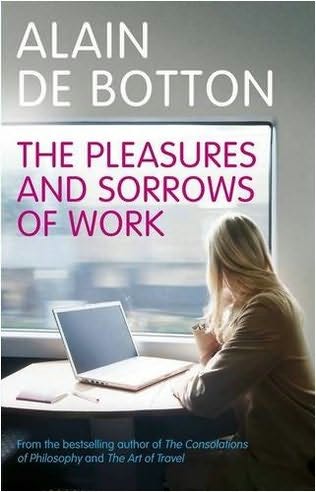
Alain de Botton: The Pleasures and Sorrows of Work (2009)


I'll confess right away: The Pleasures and Sorrows of Work is the only book by Alain de Botton I've read. Somehow, reviewers of his work have not evoked my interest in the slightest. The only thing I know about him is that he is a best-selling author and that he has written one book on Proust and another one on the consolation of philosophy (apart from one on travel, another on love and a third one on architecture). I picked up a copy of The Pleasures and Sorrows of Work as I was aimlessly ambling through the luxurious shops of Hong Kong airport, eager to hop onto my plane and forget all about the place. And even though the book did not live up to my fears - that it'd be 300 pages or so of self-help-ish musings on how to make work more fun - it still fits the restless, chilly and blasé atmosphere of an airport.

So, what is this? It is not self-help lit nor is it philosophy. de Botton writes what I would call a philosophical style of journalism. Among the ten chapters in the book we find essays on biscuit manufacturing, career counselling, entrepreneurship and rocket science. The intention of the book seems to be to address aspects of work that are somehow overlooked in the day-to-day business of our lives.

Is de Botton a successful philosophical journalist? Um, no. de Botton's style is eloquent and lofty, and the overall impression I get from reading the book is that he looks down on work with humorous contempt. As another reviewer has pointed out, de Botton's approach towards work is like one would ask Oscar Wilde to write a report about the manual labor done in a cookie factory. As a social reporter, de Botton's book lacks depth and direction.
de Botton perceives work as potentially admirable - he writes about the hidden impressiveness of pylons, the grandeur of cargo ships along with the intricacies of accounting and the awe elicited by aviation. But as much as he expresses his admiration of work, the text abounds with an endless string of remarks about the futility and frivolity of work. Every now and then, the author chooses to talk about the work people do from a "cosmic" perspective. And, de Botton tirelessly reminds us, career planning or cookie industries or accounting crumble to dust from the perspective of eternity. Accountants, he writes, are reconciled with the thought that their work will leave no trace in history. "They are well adjusted enough to have made their peace with oblivion. They have accepted with grace the paucity of opportunities for immortality in audit." I react to this in the same way as I react to the style of thinking about work in Hannah Arendt: if we cannot admire work for the heroic traces it leaves in history, we are left in the dark. In distinction to Arendt, de Botton opts for a glorification of the fleeting, oh-so-futile sense of meaning that work, no matter how dull and absurd the tasks that occupy us, somehow fills us with.
But why is it this angle, or that of history-from-stone age-onwards - that looms over the text? Frankly, I have no answer but that this is an expression of a peculiar form of aesthetic view of life subscribed to by de Botton. The sad thing is, that even though some passages could have developed into sound critique of work-related phenomena (alienation/consumerism...) his way of writing nivellates every thing that has to do with work to what comes to appear as a pile of waste. Towards the end of the book, I am not surprised at all to read a litany of the following kind:

Death is hard to keep in mind when there is work to be done: it seems not so much taboo as unlikely. Work does not by its nature permit us to do anything other than take it too seriously. It must destroy our sense of perspective, and we should be grateful to it for precisely that reason, for allowing us to mingle ourselves promisculously with events, for letting us wear thoughts of our own death and the destruction of our enterprises with beautiful lightness, as mere intellectual propositions, while we travel to Paris to sell engine oil. We function on the basis of a necessary myopia.

Sorry, Alain, but this comes across not as a quietly sobering "existentialist" meditation, but as depressing blurry-eyed resignation. If you want to say that we are necessarily suffering from myopia, go ahead, but I don't find that attitude very far-reaching philosophy-wise - or any-wise.

Of course, I do recognize this way of talking about work. But when expressed by my parents, the idea of work as a necessary distraction does not take the shape of a philosophical "truth". Rather, it is an expression of a overwhelmingly regrettable pessimism that I fight not to inherit from them. But, by contrast, de Botton invests nothing in his "revelation". It is deeply unclear what he takes himself to be saying. What is the aim of the book? Is he critical of any particular phenomenon? Well, sometimes he fires away one or two sour remarks about the folly inherent in the gravely manner in which we deal with the topic of work. Amen, I say to that, but de Botton leaves it at that. Nor does he seem to be interested in structures of power/ inequality/ oppression, even though he dedicates one chapter to the uncanny journey of a tuna from the Maldivian seas to a supermarket in London. Do I learn anything about tuna fishing & the transportation of consumer goods? Well, to be honest, not a great deal, over and above what I already know: many consumers have but a hazy idea how the content of their shopping bags ended up there.
de Botton is very successful in evoking the Uncanny: he leaves me with something utterly fuzzy - he serves eloquent platitudes rather than evoking an urgency in the reader to struggle with her own feelings about work. When I am finished reading his book the impression overwhelming me is that of dread and fatigue. I find this very counter-productive, because I am not led into any new or interesting ways of thinking about the world of work. Instead, de Botton lures me into glaring onto the world as a place that can be admired if we are lucky enough to take the position of observers but if we get into details what people do is either silly or boring - and mostly, de Botton seems to say - both.

According to the blurb on the back sleeve, de Botton sets out to investigate what makes work fulfilling or soul-destroying. And even though he pays visits to a biscuit factory, an aviation exhibition or a large accounting firm, I never get the sensation that de Botton is really interested in what those he talks to has to say. One passage is especially revealing. He meets up with an employer, called Renae (most male workers are not referred to with their first name only) who is involved in biscuit brand performance. For some reason, de Botton has made up his mind that "Renae" is a meaningless cog in the cookie-wheel, that the value of her existence is crushed under the business weight of Cookie Brands. Let me quote de Botton:

I wondered out loud to Renae why in our society the greatest sums of money so often tended to accrue from the sale of the least meaningful things, and why the dramatic improvements in efficiency and productivity at the heart of the Industrial Revolution so seldom extended beyond the provisions of commonplace material goods like shamoo or condoms, oven-gloves or lingerie. [....] Renae had little to add to this analysis. A terrified expression spread across her features and she asked if I might excuse her.

But hello! Mr de Botton, you scurry into this lady's office, lecturing her on the insignificance of her work - and then you have the guts to point out her lack of reply. In fact, we know nothing about "Renae's" ideas - nor about her thoughts about Mr de Bottons elegant "analysis". In quite a few places, the same pattern is repeated; instead of giving a serious and honest report about his interlocuters' thoughts and feelings, he delivers shallow and belitteling smirks that in quite a few places elicit embarrassment - on behalf of oneself and on behalf of the author.

So: my verdict upon this book is that it is entertaining to a fair extent - the photos that accompany the text are pleasant to look at, for example - but it does not reveal very much about the world of work, not from a social perspective, nor from a philosophical or political point of view. And if we are to take de Botton's perspective in this book seriously, one might end up with a bullet in one's head. Life is a frivolous affair, after all, as biscuit, shopping and tax tables, if we listen to de Botton, occupy the most important place in our lives.

21 May 2009

The Advisory Circle - Other Channels


This is fun. "Retro-futurism".

"Psykologi: Miehen pitäisi asettaa naiselle rajat"

("Psychologist: men should set limits to women") From yesterday's YLE-news page.

jesus.....fucking....christ.

18 May 2009

15 May 2009

I suddenly come to think of a phone call I received many years ago. I was visiting a friend in the west coast of Norway. She worked with cows. I was afraid of the cows. When the cows saw me, they jumped up and down as they sensed my unease. I wasn't used to cows. I sat at my friend's house, skimming the pages of Nietzsche's On the genealogy of morality (damn me for that!). The phone rang. A man greeted me in broken swedish. He had a weather-beaten voice. He must have been around 60 years old. Or more.

- My name is -----. I am a geneticist, a ---- at the university of Turku.
- eh.... (WTF? Geneticists don't give me a ring every day.)
- You have a very peculiar structure of chromosomes.... (I knew that)
He initiated a lecture about my special genetical set up and then some business:
- ...And we would need a blood sample from you....For research purposes. Do we have your permission?
-eh....I suppose....it's ok....
- And you .... function well? You are healthy?
- I suppose. I guess. [I was having the worst time of my life at that point, but what would I have said. I had no intention of talking about my state of health to a god damn geneticist with a sand-papery voice.]
- And of course we know that you were born with ---- [and then he meticiously listed all my physical defects; he knew stuff about stuff, that man.] And then he said:
- Well, you know, with a chromosome set-up like that you're lucky not to have had a ... [he was fumbling around for words] hm.... more problematic development. Some retardation. [Said in a neutral tone of voice, he was talking about scientific measures of probability]
Dumbfounded, I didn't know what to say. I was spooked out. But a promise is a promise. I went to have my blood sampled. The day was grey, TYKS was very Riget-ish with its drab, winding corridors and the nurse who handled the needle was rude, which made me feel all the more stupid for having made a bloody sacrifice for Science.

I wonder what that sample was used for. I received no further information about their research project. Maybe I have a monstruous clone of myself prowling the basement of some lab over at TYKS. Watch out, someday it will escape and it will kick your asses.

14 May 2009

Why work?

Check out this interesting homepage dedicated to criticism of "work as virtue". "Creating livable alternatives to wage society". Lots of links, text and interesting stuff. Bob Black, an American anarchist, sometimes derided with the epithet of "lifestyle anarchist", is one often-mentioned name here. He has written a manifesto called "The abolish of work" that begins like this: "No one should ever work. Work is the source of nearly all the misery in the world." I'll get back to this in due time.